
Introduction
Use DWH Wizard to create import and historization definitions for selected Sources. Choose Hist, review the import and history package names and target settings, and inspect the generated definitions before executing the packages.
Applicability
Use this procedure when a source object must be imported and historized as part of the DWH objects generated by AnalyticsCreator.
Prerequisites
- Configure a connector that can return the required metadata, or create the required source definitions.
- Identify the schema and table filters needed to locate the source object.
- Confirm the naming requirements for import and historizing packages and tables.
- Confirm that historization is appropriate for the selected object.
Steps
Select source metadata
Expand Connectors.
The expanded Connectors folder in the navigation tree. 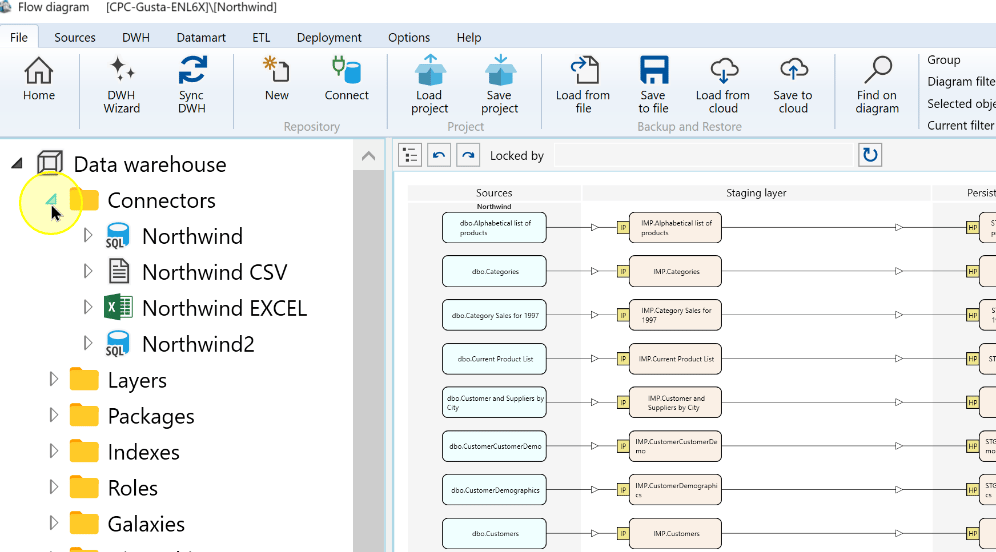
Open the required connector’s context menu.
The Northwind connector selected in the navigation tree. 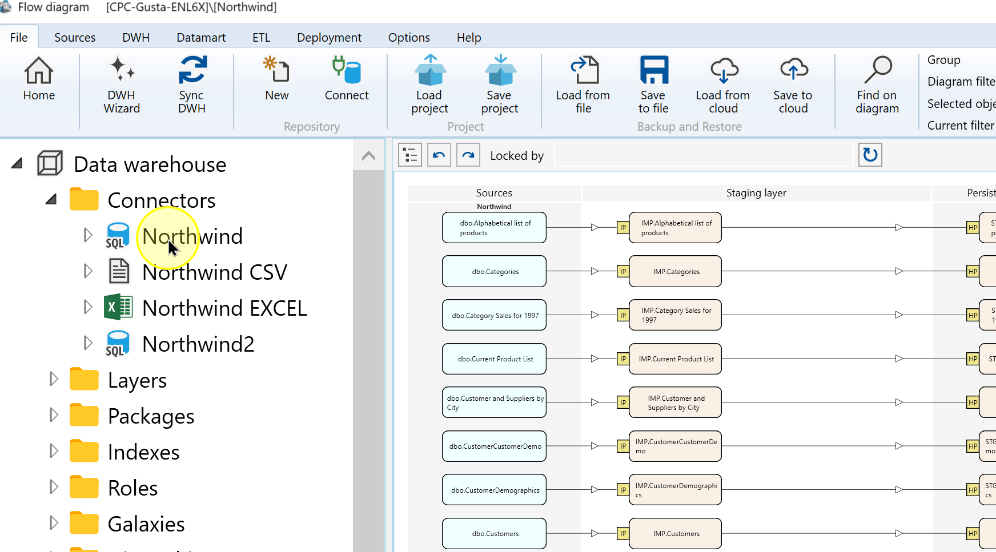
Choose DWH Wizard. The ribbon and supported Sources or diagram menus provide alternative entry points.
DWH Wizard in the connector context menu. 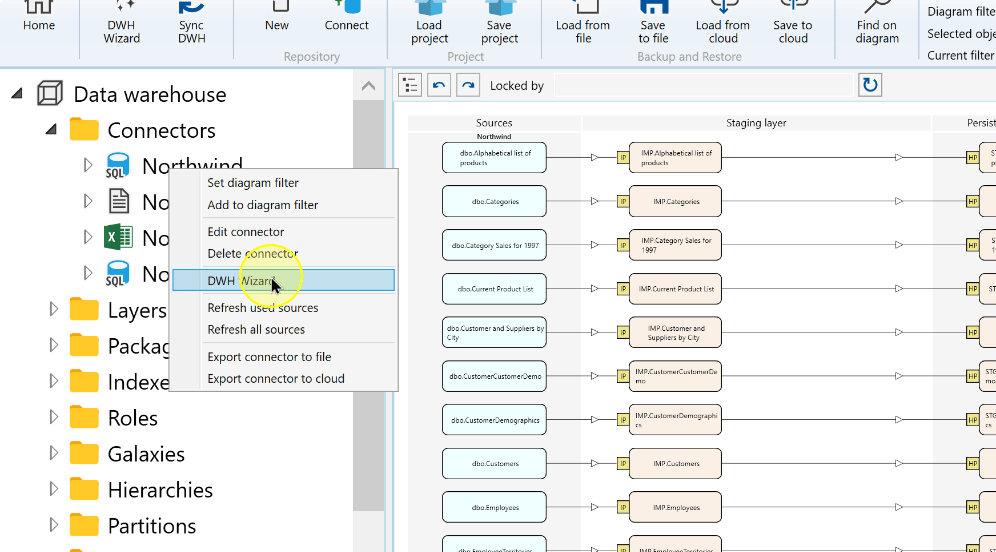
Choose Use metadata of existing sources for the illustrated route. If reading connector metadata instead, select that mode and confirm the connector.
Setting Explanation Read metadata from connector Reads the definitions from the external source through the selected Connector. Use metadata of existing sources Uses Source definitions already stored for that Connector. Use this route when working from those saved definitions. The DWH Wizard metadata source options. 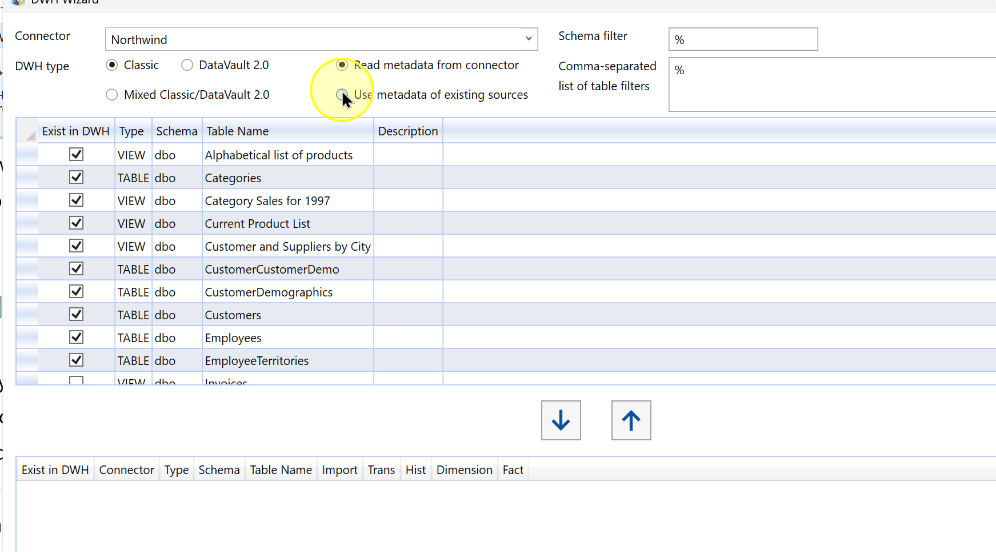
Enter the required schema and table filters and choose Apply.
Apply refreshes the source-object list using the selected metadata settings. 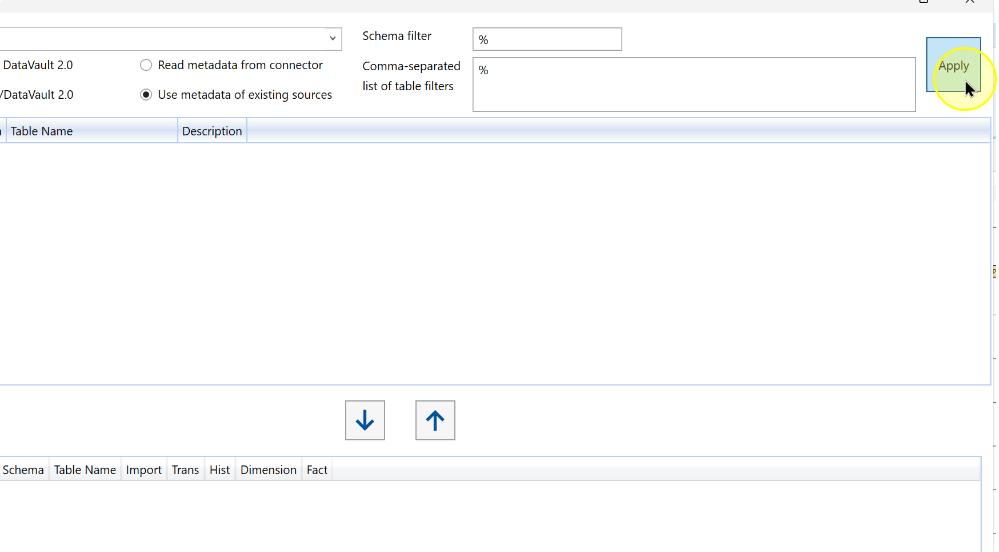
Review the refreshed source list and confirm that the required objects are available.
The source-object list after applying the metadata settings. 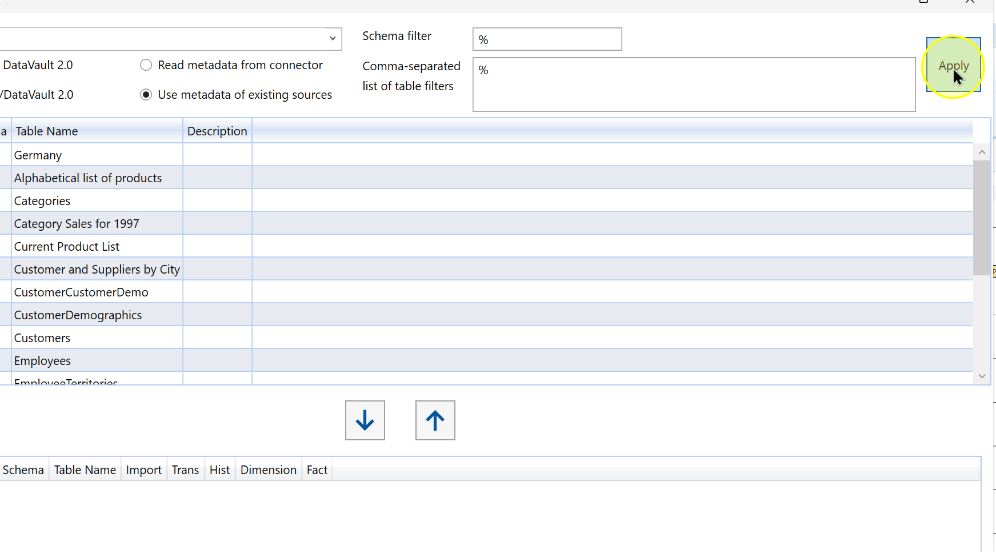
Select the required Source by its Connector, Type, Schema and Table Name. The example selects the Germany query in schema Core.
The Germany source object selected in the source list. 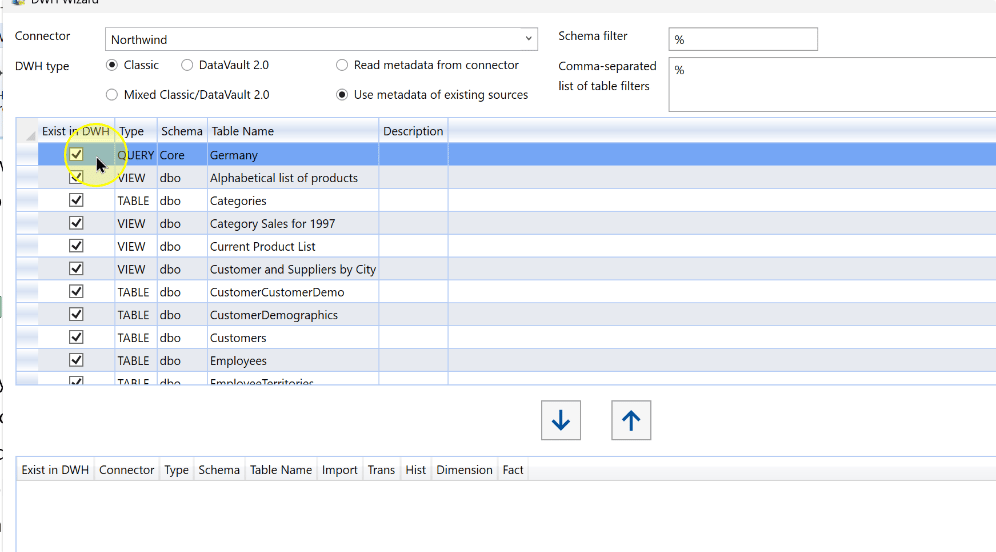
Choose the down arrow to move the selected object into the configuration list.
The down-arrow control adds the selected source object to the configuration list. 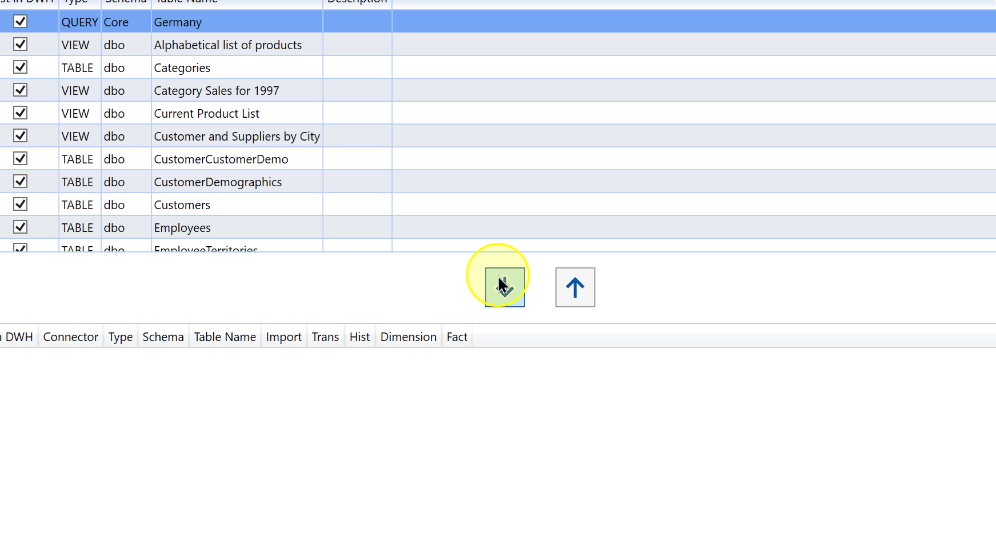
Configure historization and finish
Select Hist and confirm Import is selected for the Source. Selecting Historization also selects Import. Historization prepares the flow from the import data in the Staging Layer (IMP) to historicized data in the Persisted Staging Layer (STG). Review any additional classifications, then choose next.
Import and Hist are selected for the configured source object. 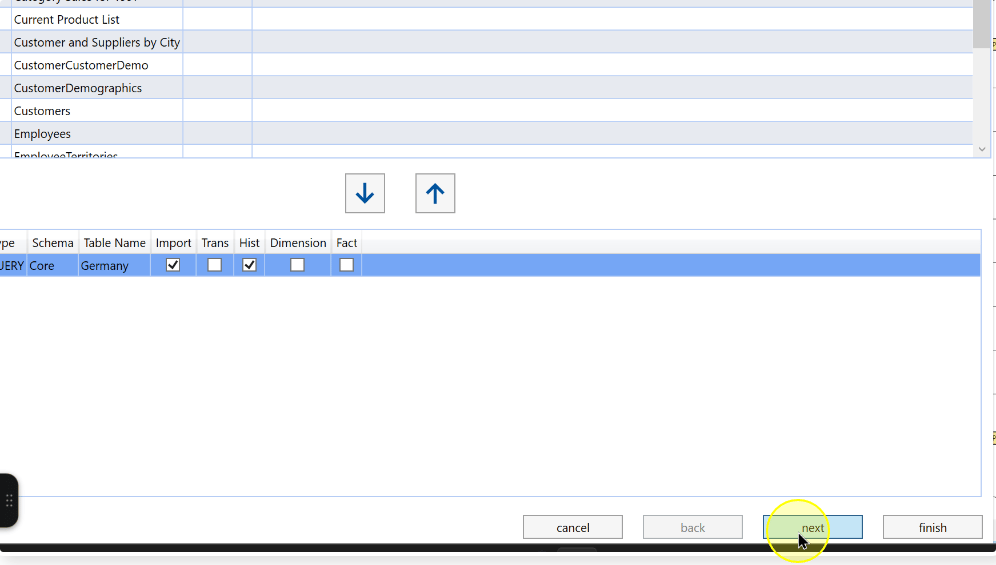
Review the import and historization package and table naming settings before choosing next. Keep literal prefixes and supported placeholders consistent with the intended generated names.
Setting Explanation Import Package names Naming template for import packages, such as IMP_{CONNECTOR_NAME}{NR}.Historizing Package names Naming template for history packages, such as HIST_{CONNECTOR_NAME}{NR}.Table names Names the generated tables; {SRC_NAME}uses the selected Source name.{CONNECTOR_NAME}/{NR}Connector name and numbering placeholders. Preserve their exact spelling; inspect the generated names. The naming settings page before continuing through the wizard. 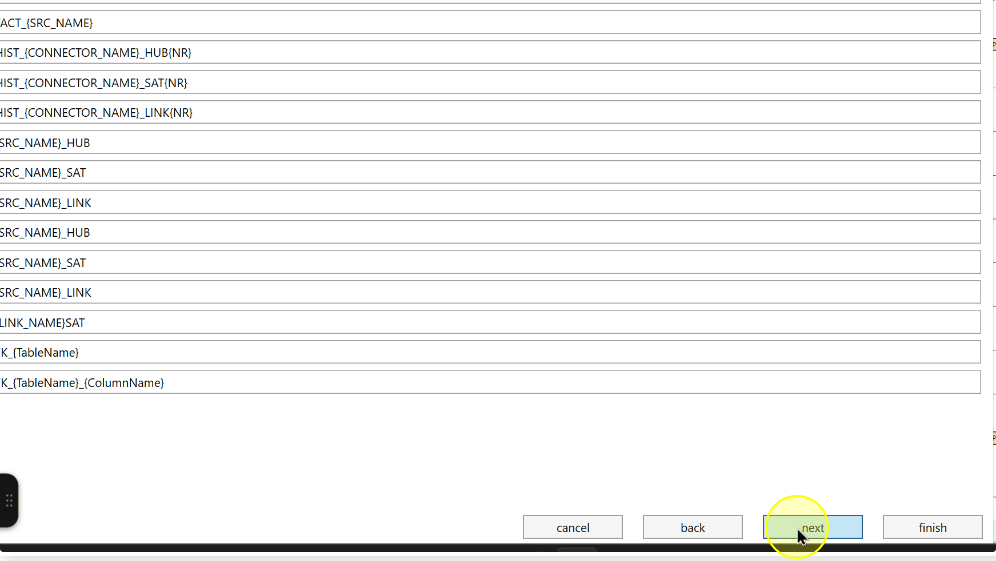
Review final options for the intended history configuration, including the target schemas for Import tables and Historicized tables. Check any requested relation retrieval, date dimensions or predefined transformations. Choose finish, then inspect the generated import, historization and package definitions before execution.
The finish control on the final DWH Wizard page. 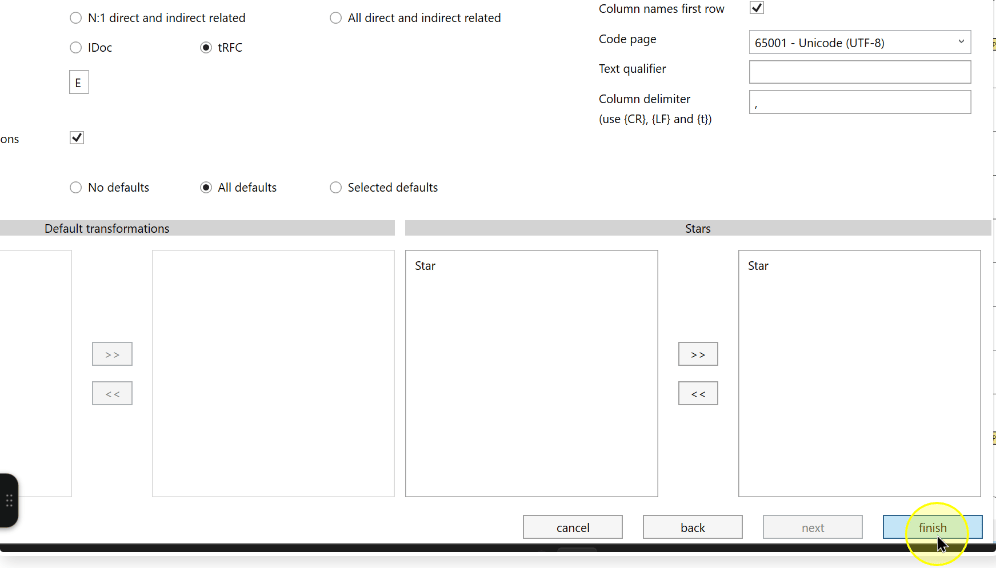
Expected Results
- Inspect the generated import, historization and package definitions for the selected Sources. Compare Source identity, target schemas and generated names with the wizard choices.
- Review the historization definition before execution. This procedure creates configuration; historical data and processing results require execution checks.
Decisions and variations
- Hist requires Import; confirm both for each selected Source.
- Additional classifications such as Trans, Dimension and Fact request related objects beyond basic historization.
Troubleshooting
- Required Source absent: check Connector, metadata mode and filters before Apply.
- Historization differs: compare Hist/Import classifications, naming and target schemas with the generated definitions before execution.
