Back to all Blogs
Key Questions for Data Warehouse Business Requirements and Self-Service BI Success



Building an effective data warehouse requires a clear understanding of your organization's business requirements. To determine these requirements, it's essential to ask the right questions. In this article, we explore the key questions you need to ask to ensure your data warehouse meets your organization's needs.
-
What business problems are you trying to solve?
The first step in determining your organization's business requirements is to identify the key problems that your data warehouse needs to address. This could include anything from improving sales performance to enhancing customer satisfaction, optimizing operations, or ensuring regulatory compliance.
-
What data do you need to solve those problems?
Once you've identified the business problems, the next step is to determine what data you need to solve them. This might include customer data, sales data, financial data, operational data, marketing data, and external benchmark data.
-
How is the data currently stored and managed?
It's essential to understand how data is currently stored and managed within your organization. This includes identifying systems, spreadsheets, files, and databases where data resides and determining whether the data is structured, semi-structured, or unstructured.
-
How is the data being used currently?
To build an effective data warehouse, you need to understand how data is currently used. Identify who uses it, how frequently it is accessed, which tools are used (Excel, BI tools, custom apps), and how it is being analyzed or reported today.
-
What are your reporting and analysis requirements?
To ensure your data warehouse is aligned with your organization’s needs, you must identify reporting and analytics requirements. Define what reports, dashboards, KPIs, and ad-hoc analyses are needed, how often they are required, and which roles need access (executives, analysts, operational teams).
-
What are your data governance requirements?
It is crucial to understand your data governance requirements. This includes data quality, data privacy, regulatory compliance, and security. You must define who owns which data, who may access or change it, what approval flows exist, and how data is monitored and audited over time.
By asking these key questions when determining your business requirements for a data warehouse, you ensure that your solution is tightly aligned with your organization's goals and becomes a valuable, trusted asset.
Skills and Departmental Considerations for Self-Service BI and DWH Projects
In addition to clarifying business requirements, it is crucial to evaluate the skills and capabilities within your organization that can drive a self-service business intelligence (BI) approach and successfully execute a data warehouse project using modern architectures and modeling techniques.
Which skills does your organization possess?
To determine if your organization has the necessary skills for a self-service BI approach and data warehouse project, assess the following areas:
- Data analysis and visualization: Identify individuals or teams with expertise in analytics, visualization, and reporting tools. These skills are essential for building meaningful dashboards, KPIs, and self-service reports.
- Data management and governance: Check whether you have professionals who can manage data integration, transformation, data quality, and governance. These roles ensure your data is consistent, trusted, and compliant.
- Technical proficiency: Evaluate skills in database administration, data modeling, ETL/ELT, and knowledge of modern data warehousing technologies (cloud DWH, data lakes, lakehouses).
- Business and domain knowledge: Ensure you have stakeholders who deeply understand your business processes, KPIs, and regulatory context. They are key for translating business requirements into data models, metrics, and reports.
Are you able to drive a self-service BI approach? From which department?
Implementing a self-service BI approach requires strong collaboration between IT and business departments:
- IT department: Provides and manages the infrastructure, data platforms, security, and access. IT also supports connectivity, performance, and governance for BI tools.
- Business users and analysts: Teams from sales, marketing, finance, operations, HR, and other domains should be empowered to explore data, build their own reports, and contribute to requirements, using guided self-service BI tools.
Ideally, the BI or analytics competence center acts as a bridge between IT and business, enabling self-service while maintaining standards and governance.
Do you have the skills to drive a DWH project and modernize your architecture?
For driving a data warehouse project and modernizing legacy architectures, consider these roles and capabilities:
- Data warehouse experts: Specialists with experience in data warehousing concepts, dimensional modeling (Kimball), Data Vault, and cloud architectures.
- Database administrators (DBAs): Experts who manage performance, capacity, indexing, backups, security, and availability of the DWH platform.
- Data engineers: Professionals who design and build data pipelines, integrate diverse sources, implement ETL/ELT logic, and automate loading processes.
- Cross-functional collaboration: Successful modernization requires close collaboration between IT, business, finance, and sometimes compliance or legal. Together they identify pain points in the current landscape and define a target architecture that meets both technical and business requirements.
By assessing the skills within your organization and involving relevant departments early, you can determine whether you have the capabilities needed to drive a self-service BI approach and execute a DWH modernisation project using modern modeling approaches.
Key Take-Away
Determining your organization’s business requirements is a critical step in building an effective data warehouse. By asking the right questions about business problems, data needs, current usage, reporting, and governance, you can ensure that your data warehouse is aligned with your organization’s strategy and delivers long-term value.
Evaluating the skills and responsibilities across IT and business departments is equally important. A successful data warehouse and self-service BI initiative requires a blend of technical expertise, data governance, and domain knowledge, supported by strong collaboration.
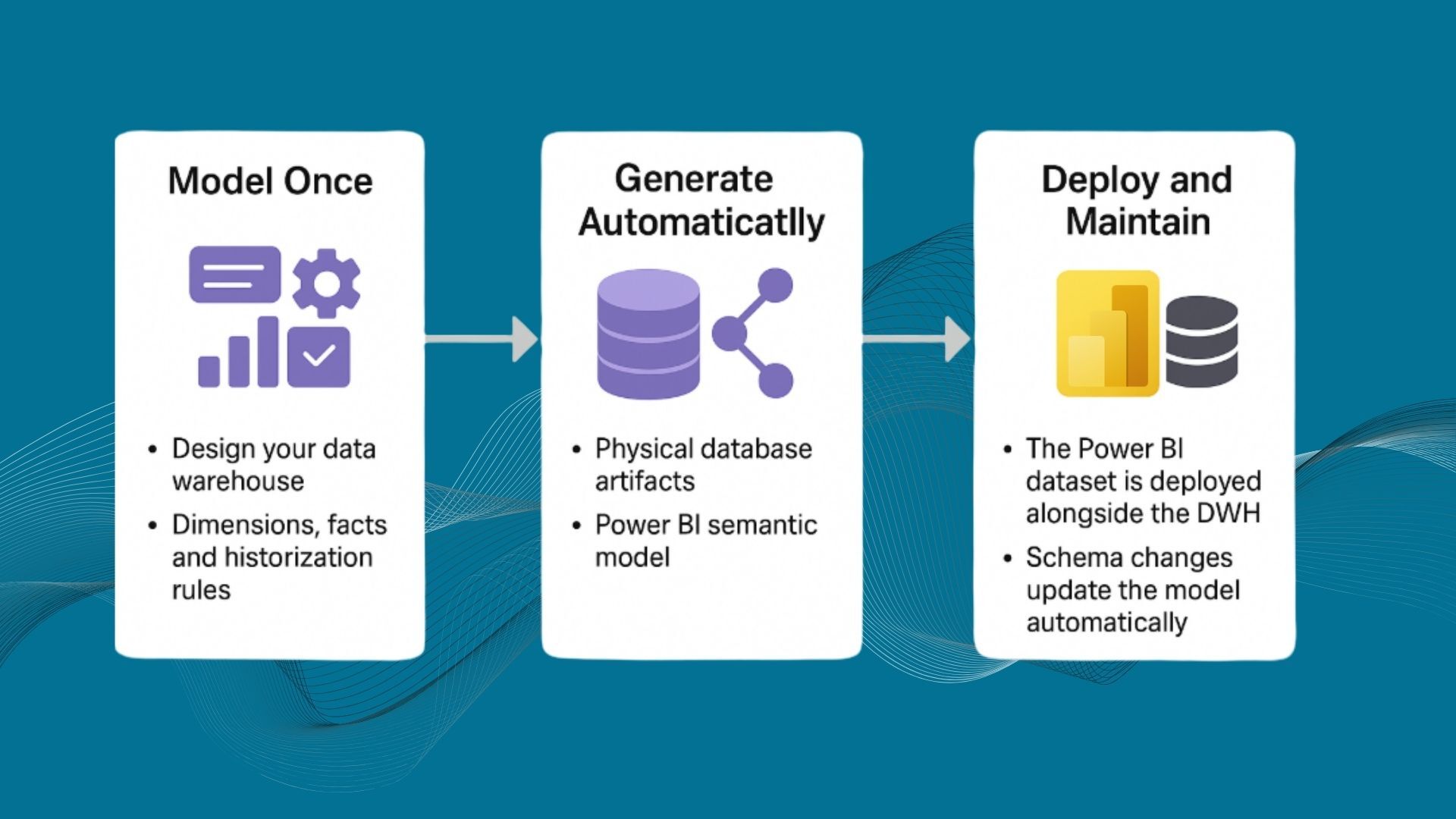
We strongly recommend utilizing data automation tools, such as AnalyticsCreator, to streamline operations, reduce manual effort, and free up staff to focus on problem identification, data governance, and high-value analytics. These tools can significantly improve your data warehouse’s agility and help you make better, faster, data-driven decisions.
Frequently Asked Questions
Why are business requirements important for a data warehouse?
Business requirements ensure your data warehouse is built to support real-world decision-making. They guide what data to capture, how to model it, which KPIs to track, and how reports and dashboards should be delivered to users.
How do I know what data to include in my data warehouse?
Start from the business problems and KPIs you want to measure, then map backwards to the processes and systems that generate the required data. Prioritise high-impact subject areas like sales, finance, operations, and customer behaviour.
Who should be involved in defining data warehouse requirements?
Involve both business and IT stakeholders: business owners, department heads, analysts, data stewards, architects, and data engineers. This mix ensures your DWH satisfies both strategic and technical needs.
What skills are needed to drive a self-service BI approach?
You need skills in data analysis and visualization, data modeling, data management and governance, BI tooling, and strong domain knowledge. Business users must be empowered, and IT must provide a governed, reliable data foundation.
Which department should own self-service BI?
Ownership is usually shared: IT (or a central data/analytics team) owns the platform, data models, and governance; business departments own the use cases, KPIs, and adoption. A BI or analytics competence center often coordinates both sides.
What roles are critical for modernizing an existing data warehouse?
Key roles include data warehouse architects, data engineers, DBAs, data governance leads, and business stakeholders. Together they design the target architecture, select modeling approaches, and prioritize migration steps.
How can data automation tools help with a DWH project?
Automation tools like AnalyticsCreator reduce manual coding, standardize modeling patterns, accelerate ETL/ELT development, and automate deployment. This cuts project time, improves consistency, and makes ongoing changes far easier.
How do data governance requirements influence data warehouse design?
Governance requirements drive how you model sensitive data, implement access controls, track lineage, manage data quality, and comply with regulations. They influence architecture, processes, and technical controls from day one.