Generative AI in Business Intelligence: Opportunities, Risks & How to Use It Responsibly

Generative AI in Business Intelligence: Opportunities, Risks & How to Use It Responsibly
author
Rosario Di Lorenzo Jun 28, 2024
Generative AI in Business Intelligence: Opportunities, Risks & How to Use It Responsibly
3:16

In the world of business intelligence and analytics, Generative AI (GenAI) has emerged as one of the most disruptive and transformative technologies of our time. Its ability to autonomously generate analytical models, automate workflows, and produce insights with minimal human intervention promises a future in which data-driven decision-making becomes faster, more scalable, and remarkably intuitive. Yet, as with any fast-evolving innovation, GenAI introduces risks that organizations must recognize and manage thoughtfully.

The Allure of GenAI: A Remarkable Step Forward

Bild (4)

Imagine GenAI as a highly skilled chef capable of creating exquisite dishes from scratch. This chef can whip up complex recipes faster than any human chef, producing meals that delight and amaze. In the realm of business, GenAI plays a similar role. It can quickly generate predictive models, identify patterns, and uncover insights that would take human analysts weeks, if not months, to discover. This capability is akin to having a superpower in the world of data analytics, enabling businesses to stay ahead of the competition and make informed decisions with unprecedented speed.

Bild (2)

The Hidden Dangers: When Models Go Wrong

However, what happens when the chef occasionally makes a mistake and adds the wrong ingredient? In the culinary world, this might result in a single bad dish. But in the world of GenAI, a flawed model can have far-reaching consequences. If a self-generated model contains inaccuracies, these errors can propagate, leading to the development of further flawed models. It's like a domino effect, where one small mistake sets off a chain reaction of errors.

For instance, consider a scenario where GenAI is used to develop a model predicting customer churn. If the initial model is incorrect, subsequent decisions based on this model, such as marketing strategies and customer retention efforts, will also be flawed. This can lead to significant financial losses and damage to the company's reputation.

GenAI’s promise is undeniable: accelerated analytics, automated insights, reduced manual effort, and unprecedented creativity in problem-solving. It has the potential to reshape entire industries by enabling faster experimentation, enhanced predictive capabilities, and AI-driven optimization across business processes.

But with great power comes great responsibility. As organizations adopt GenAI for BI and analytics, it becomes essential to apply rigorous governance, validation, and oversight to ensure that these models remain accurate, ethical, and aligned with business objectives.

Embracing Progress—With Caution

GenAI unlocks new capabilities, but relying on it blindly can introduce serious risks. A balanced, responsible approach is key to leveraging its full potential.

  • Rigorous Validation & Testing: Just as a chef tastes a dish before serving it, every GenAI-generated model must undergo thorough validation. This safeguards against errors, biases, or unexpected outcomes before they impact real-world decisions.
  • Human Oversight: Even the most advanced GenAI cannot replace human expertise. Data scientists and domain specialists play a crucial role in reviewing model outputs, ensuring reliability, and catching nuances that AI may overlook.
  • Continuous Learning & Adaptation: AI evolves quickly. Organizations must continuously update their knowledge, tools, and validation practices to keep pace with new algorithms, risks, and governance standards.

A Balanced, Responsible Approach to GenAI

GenAI is a breakthrough for business intelligence, but it is not a magic wand. It must be used with discipline—grounded in solid data practices, strong governance, and continuous oversight.

When implemented thoughtfully, GenAI enhances human decision-making rather than replacing it. It supports analysts, engineers, and business users by providing structured insights and accelerating analytics workflows. But when used irresponsibly, its outputs can mislead, amplify biases, or erode trust—outcomes no organization can afford.

Aristotle famously said, “Virtue lies in our power, and similarly so does vice.” The virtue of GenAI lies in its ability to revolutionize analytics; its vice lies in the risks of unchecked automation. The future belongs to organizations that embrace GenAI’s progress while maintaining responsibility, transparency, and rigorous quality control.

Frequently Asked Questions

What is Generative AI in business intelligence?

Generative AI refers to AI systems that create analytical outputs—such as models, reports, and insights—with minimal human input. In BI, it helps automate data analysis and accelerate decision-making.

What are the main risks of using GenAI for analytics?

Risks include inaccurate outputs, hidden biases, lack of explainability, and governance issues. Without validation and human oversight, these errors can lead to poor business decisions.

Can GenAI replace data scientists or analysts?

No. GenAI supports and accelerates their work but cannot replace human judgment, domain expertise, or ethical reasoning.

How can companies ensure GenAI-generated models are accurate?

By applying rigorous validation, continuous testing, strong governance, and human review. Regular performance monitoring is essential.

Why is metadata important for GenAI?

Metadata gives AI context about how data is structured and what it means. Rich, consistent metadata helps GenAI produce more accurate and reliable insights.

How often should GenAI models be reviewed?

They should be monitored continuously and reviewed regularly—often monthly or whenever data sources or business rules change significantly.

Is GenAI useful for small and medium-sized businesses?

Yes. GenAI can automate repetitive analysis tasks and provide advanced insights without requiring large or highly specialized data teams.

How does GenAI integrate with BI tools like Power BI?

GenAI can generate queries, calculations, transformations, explanations, or predictions that feed directly into Power BI dashboards or data models.

What best practices should companies follow when adopting GenAI?

Start small, keep humans in the loop, validate outputs, maintain governance, document everything, and continuously refine models as data evolves.

What does the future of GenAI in BI look like?

The future is “hybrid intelligence,” where AI handles automation and scale while humans ensure accuracy, ethics, and strategic alignment.

By combining innovation with accountability, we can ensure that GenAI elevates accuracy, accelerates insights, and strengthens—not replaces—the human intelligence that guides great decision-making.
Related Blogs

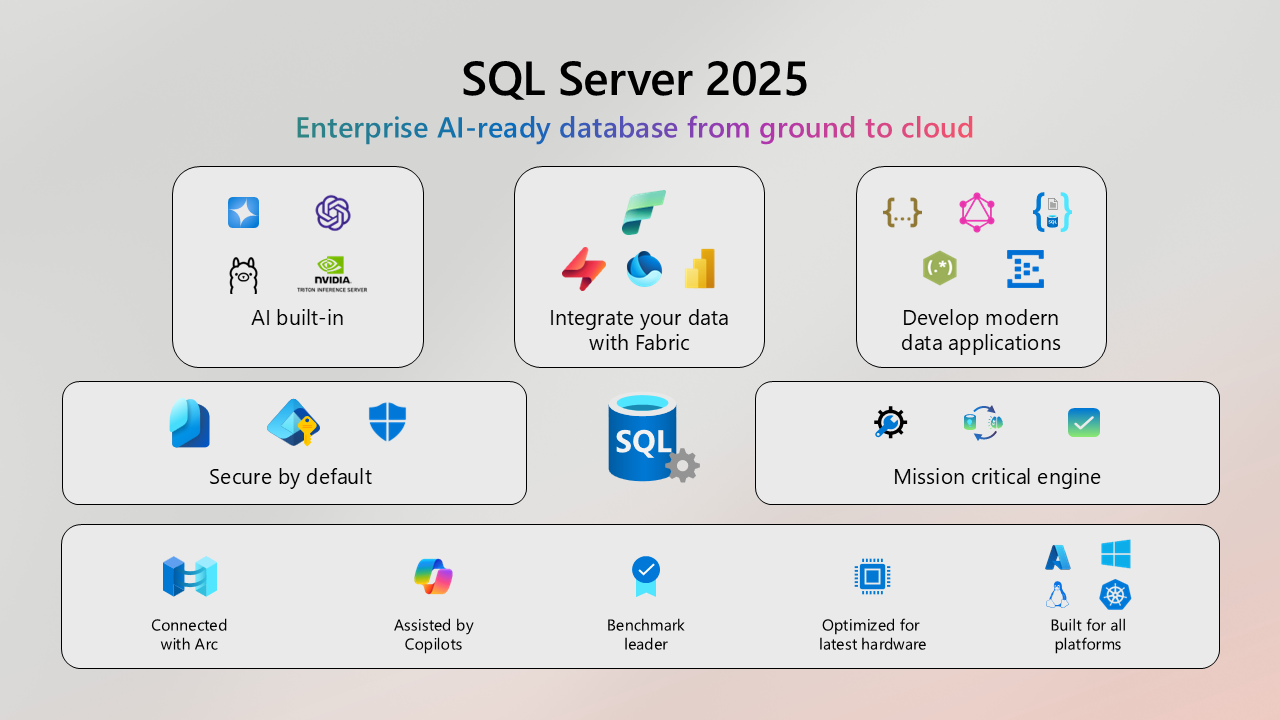
SQL Server 2025: Native AI, Enhanced Security & Deep Fabric Integration

SQL Server 2025: Native AI, Enhanced Security & Deep Fabric Integration
GO TO >

Thriving in a VUCA World: How AnalyticsCreator and Microsoft’s Data Ecosystem Enable Adaptive, Intelligent Data Strategies

Thriving in a VUCA World: How AnalyticsCreator and Microsoft’s Data Ecosystem Enable Adaptive, Intelligent Data Strategies
GO TO >

Vendor Lock-in, Data Sovereignty and Sovereign Cloud: How Data Warehousing Protects Your Independence

Vendor Lock-in, Data Sovereignty and Sovereign Cloud: How Data Warehousing Protects Your Independence
GO TO >

Bridging the Data Trust Gap: How Lineage, Historization & Metadata Improve Data Transparency

Bridging the Data Trust Gap: How Lineage, Historization & Metadata Improve Data Transparency
GO TO >

SQL Server 2025: Native AI, Enhanced Security & Deep Fabric Integration

SQL Server 2025: Native AI, Enhanced Security & Deep Fabric Integration
GO TO >

Thriving in a VUCA World: How AnalyticsCreator and Microsoft’s Data Ecosystem Enable Adaptive, Intelligent Data Strategies

Thriving in a VUCA World: How AnalyticsCreator and Microsoft’s Data Ecosystem Enable Adaptive, Intelligent Data Strategies
GO TO >

Vendor Lock-in, Data Sovereignty and Sovereign Cloud: How Data Warehousing Protects Your Independence

Vendor Lock-in, Data Sovereignty and Sovereign Cloud: How Data Warehousing Protects Your Independence
GO TO >

Bridging the Data Trust Gap: How Lineage, Historization & Metadata Improve Data Transparency

Bridging the Data Trust Gap: How Lineage, Historization & Metadata Improve Data Transparency
GO TO >

SQL Server 2025: Native AI, Enhanced Security & Deep Fabric Integration

SQL Server 2025: Native AI, Enhanced Security & Deep Fabric Integration
GO TO >

Thriving in a VUCA World: How AnalyticsCreator and Microsoft’s Data Ecosystem Enable Adaptive, Intelligent Data Strategies

Thriving in a VUCA World: How AnalyticsCreator and Microsoft’s Data Ecosystem Enable Adaptive, Intelligent Data Strategies
GO TO >

Vendor Lock-in, Data Sovereignty and Sovereign Cloud: How Data Warehousing Protects Your Independence

Vendor Lock-in, Data Sovereignty and Sovereign Cloud: How Data Warehousing Protects Your Independence
GO TO >

Bridging the Data Trust Gap: How Lineage, Historization & Metadata Improve Data Transparency

Bridging the Data Trust Gap: How Lineage, Historization & Metadata Improve Data Transparency
GO TO >