Back to all Blogs


Data historization - the process of recording how data changes over time - is a core requirement in modern data warehousing. It helps teams analyse trends, understand how records have evolved, and support audit or regulatory reporting. One of the most common ways to manage this history is through Slowly Changing Dimensions (SCDs), especially SCD Type 2, where historical versions of a record are preserved instead of overwritten.
Implementing SCD historization manually can be complex, code-heavy, and prone to inconsistent logic across projects. Once historization is modelled correctly, teams can work with more trustworthy historical data for analytics, reporting, and downstream data products.
Before using AnalyticsCreator's Historization Wizard, it is important to consider a few key prerequisites and best practices.
- Preparation: Before starting the historization process, ensure that your source data is clean and well-structured. This includes removing duplicates, handling missing values, and making sure data types are consistent across your dataset.
- Performance considerations: Large datasets can slow down historization if they are not handled carefully. Consider techniques such as partitioning, incremental loads, and optimized indexing to keep performance under control in the selected target environment.
- Governance and access control: When working with sensitive or regulated data, your historization approach should support clear access rules, documented change logic, and traceable historical records. Sensitive examples should be tested with synthetic data before being applied to production scenarios.
AnalyticsCreator's Historization Wizard helps streamline this process with built-in support for Slowly Changing Dimensions. SCDs are essential for managing master data that changes over time, such as customers, products, contracts, suppliers, or organizational structures. For a broader overview of SCD concepts, see our guide to the benefits and challenges of Slowly Changing Dimensions.
Imagine you need to track how customer profile attributes change over time. A customer's region, account segment, status, or assigned sales organization may change, but historical reporting still needs to show what was true at the time an order, interaction, or contract was created. Manually tracking these changes in a dimension table can quickly become tedious and error-prone. With AnalyticsCreator and its SCD support, the process becomes more structured and repeatable.
Using the Historization Wizard for SCD Support
AnalyticsCreator's Historization Wizard guides you through historization in a few structured steps. You select your source table, define which attributes should be historized, choose the appropriate SCD types, and use AnalyticsCreator to generate the underlying logic and artifacts for the configured model.
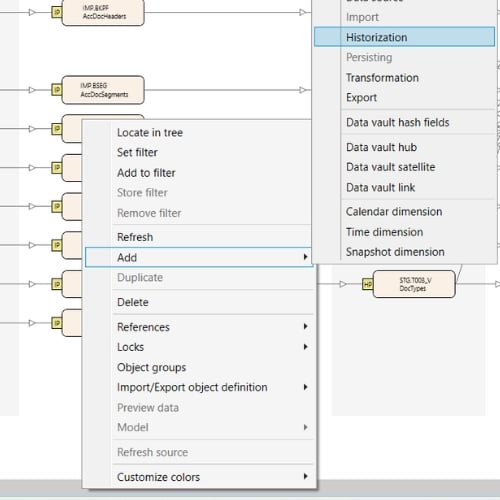
1. Summon the Wizard: Right-click your “Patients” table, invoke the context menu, and select “Add” -> “Historization.”
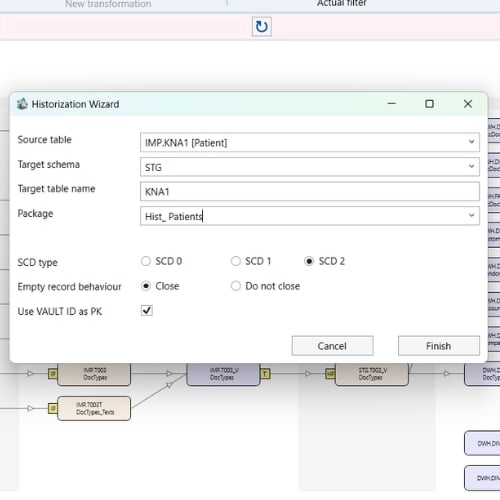
2. Source & Destination: Designate “Patients” as the source and select a dedicated schema for historical data (e.g., “Historical”).
3. Name & Package: Create a descriptive name for your historical table (e.g., “Hist_ Patients”) and choose an existing package or create a new one.
Choosing the right SCD type is an important modelling decision:
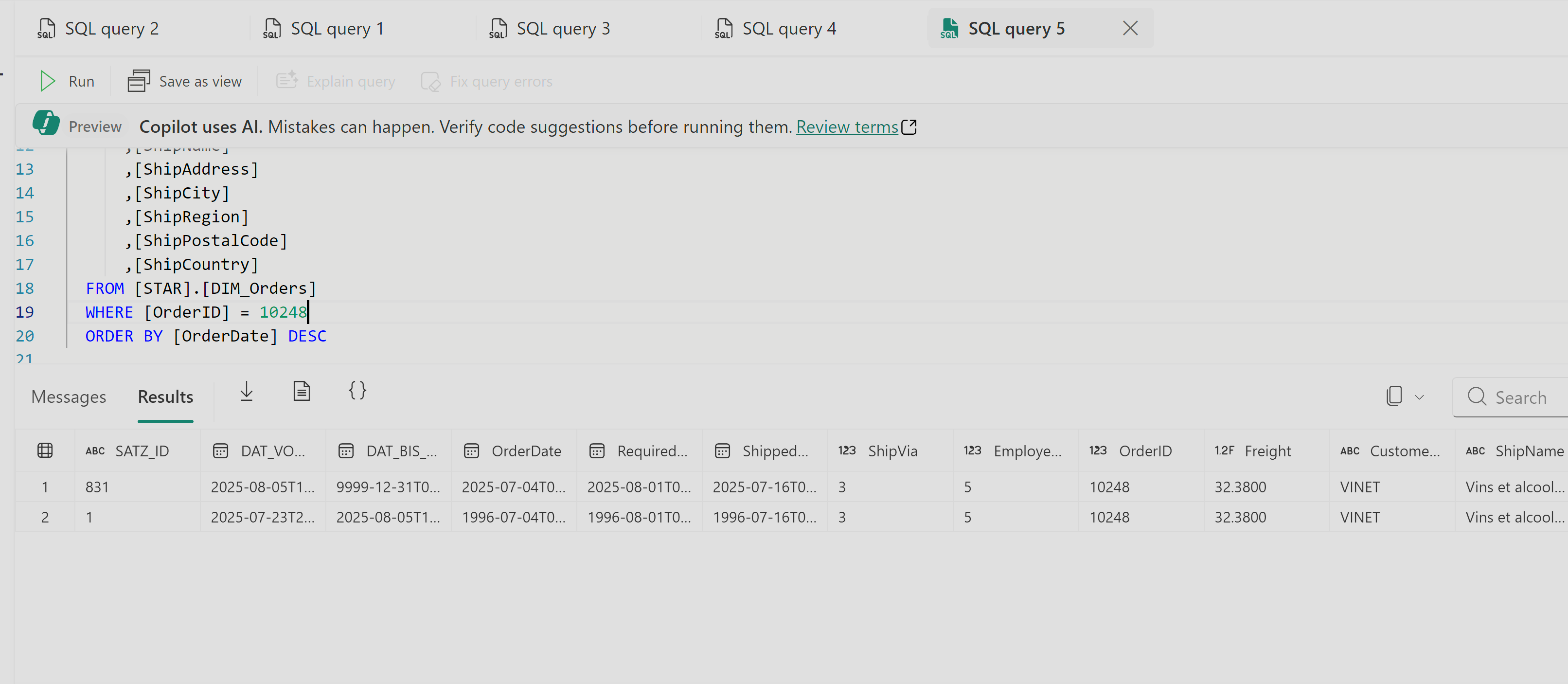
- SCD Type 2: Best suited for tracking historical changes where previous values must remain available for analysis. Each relevant change creates a new row and closes the previous validity period, so you can see what was true at a specific point in time.
- SCD Type 1: Overwrites existing values instead of keeping history. This is useful for attributes where only the latest value matters, such as a corrected spelling, updated label, or non-analytical descriptive field.
- SCD Type 0: Keeps the original value unchanged and does not track history. This can make sense for static reference attributes that should remain fixed after creation.
You then define the key that uniquely identifies each entity over time - for example, choosing Customer_ID as the business key for a Customer dimension. This ensures that historical changes are linked to the correct entity and can be analysed consistently over time.
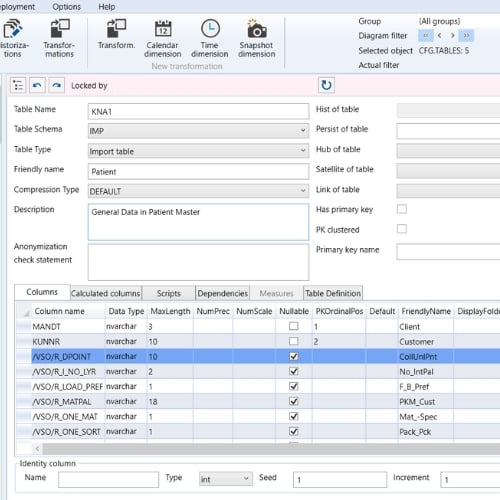
Going Beyond: Advanced Controls
- Column-Level Control: In the “DataGrid ‘Columns,’” assign the suitable SCD type to each column based on your chosen strategy.
- Handling Missing Data: Decide the course of action for missing data (e.g., close the row, keep unchanged, add an empty record).
- Time Travel Refinements (Optional): Define custom validity periods or use source fields as historical dates for added flexibility.
- Data Filters (Optional): Exclude specific data based on criteria (e.g., inactive_Patients).
- Review & Launch: Review your configuration meticulously and click “Finish” to generate the historization logic.
Beyond the Basics
The example above only scratches the surface. AnalyticsCreator offers additional options to refine historization logic:
- Customizable validity periods: Define validity ranges and date columns to control exactly how and when records are considered active, enabling more granular historical analysis.
- Advanced change detection: Use expressions and rules to decide which changes should trigger new historical records. For example, you may choose to historize a change in customer segment while ignoring a minor descriptive update that does not affect reporting.
- Microsoft-oriented implementation contexts: For teams working in Microsoft data environments, AnalyticsCreator can support repeatable modelling and generated artifacts for warehouse and analytical delivery. For a Fabric-specific example, read how AnalyticsCreator supports SCD Type 2 historization in Microsoft Fabric.
What SCD Historization Makes Possible
By using the Historization Wizard and SCD support, data teams can:
- Reduce manual development effort: Spend less time writing repetitive historization logic by hand and more time refining the model, business rules, and analytical requirements.
- Improve consistency: Apply SCD logic in a more structured way across dimensions and projects, reducing the risk of inconsistent historical records.
- Increase flexibility: Adjust historization rules and SCD behavior as business, regulatory, or analytics requirements evolve.
- Support better historical analysis: Understand how entities changed over time, such as how customer segments, product categories, supplier statuses, or organizational assignments affected reporting outcomes.
Historization is not just a technical detail. It is a strategic modelling capability that helps your data warehouse explain not only what is happening now, but how the current state was reached.
By using AnalyticsCreator and its built-in SCD support, teams can turn historization from a complex manual coding exercise into a guided, metadata-driven process for creating more traceable and repeatable historical models.