



Get trial

English

Strategic control

Preserve your organisation's data knowledge as a strategic asset.

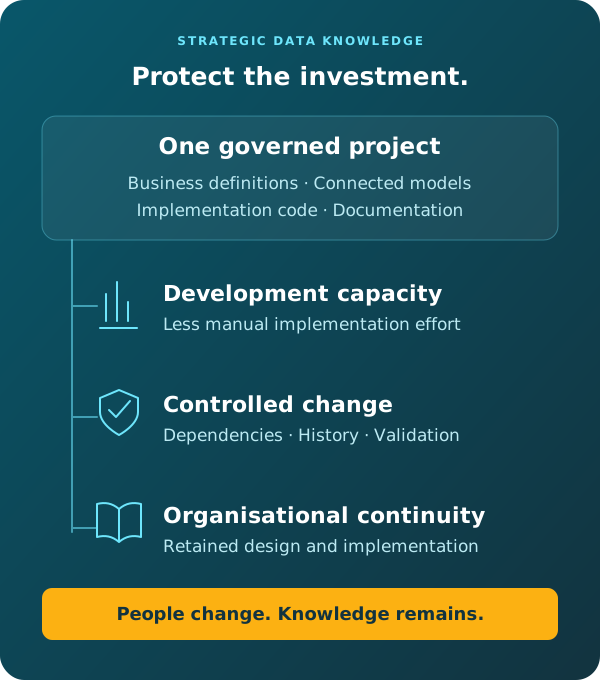
AnalyticsCreator connects business definitions, models, implementation code and documentation in one governed project. Reduce manual development effort while retaining the knowledge needed to adapt as technologies, people and service partners change.

executive-strategic-knowledge
Organisational knowledge

Retain the knowledge behind the solution.

Knowledge of how data is acquired, transformed and represented in analytical models is a valuable organisational asset.

AnalyticsCreator retains business definitions, connected models, transformation logic, implementation code and documentation in the project. This provides a foundation for continued development, reducing dependence on individual memory and scattered documentation.

The Executive Challenge

Deliver today's priorities without increasing tomorrow's dependency.

Pressure to deliver quickly can leave business rules, design decisions and dependencies scattered across code, tickets and individual memory.

The cost emerges later, when a solution needs to change, responsibilities move or technology evolves. Investment decisions should consider both the initial implementation effort and the organisation's ability to maintain and extend the result.

request-demo-bg-min

CEO:
“How to create a modern data analytics platform”

Peter Smoly, CEO of Analytics Creator explains how to build a modern data warehouse new and changing requirements from business and IT result in a dificiency of your data architecture.

peter_smoly-ceo

Earlier Confidence

Validate the direction before committing the full programme.

Working prototypes provide an early basis for assessing requirements, technical feasibility and business priorities. Feedback can inform the next design decisions.

The project can then be extended, retaining the models and implementation work already developed.

Faster Time to Value

Turn development capacity into business progress.

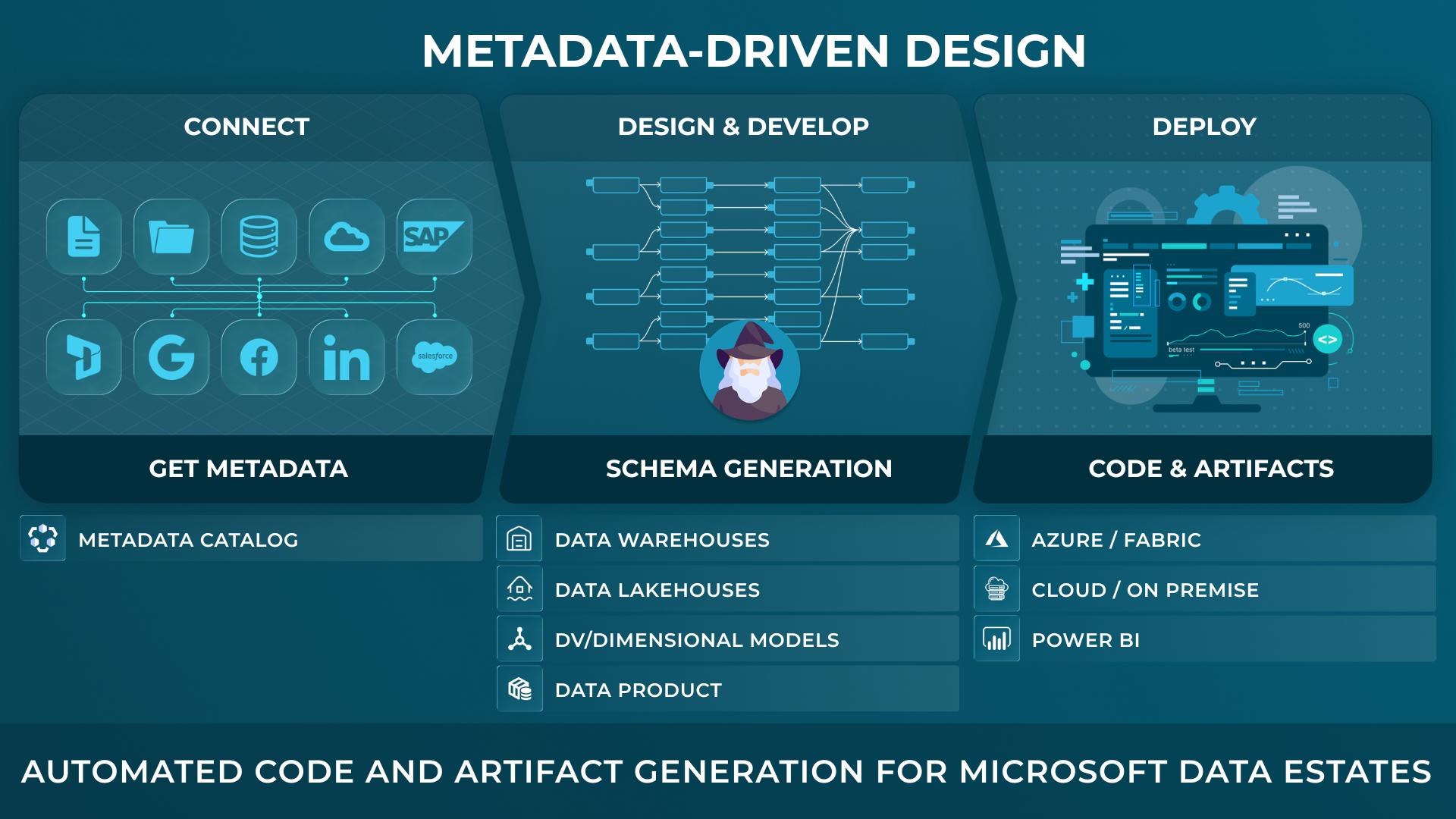
Intelligent wizards help teams develop project-specific models and processing logic from source metadata and development choices. The corresponding code evolves with the model.

Reducing manual implementation effort creates more capacity for requirements, customer communication and validation.

Lower Lifecycle Cost

Reduce the effort required for subsequent change.

Connected models, code, dependencies and documentation provide context for understanding the existing solution and developing changes within the project.

Integrated testing and project history support validation and review before updated assets are released.

Organisational Resilience

Make continuity less dependent on individual memory.

Connected definitions, transformation logic, implementation code, lineage and documentation retain knowledge of the existing solution.

This supports onboarding and continuity when responsibilities change, reducing the effort spent rediscovering previous work.

Strategic Control

Retain choice over how the solution is operated.

Native implementation assets run without an AnalyticsCreator production runtime. Operation can be managed by the customer, a service partner or a shared team.

Responsibilities follow the agreed operating model. Continued model-driven development uses AnalyticsCreator.

Investment Protection

Build on established design when technology changes.

Business definitions, relationships and transformation logic remain part of the project as supported target technologies evolve.

Target-specific structures and settings can be adapted. Technology changes still require appropriate design review and validation.

Executive Decision Questions

Assess the investment beyond the first release.

  • Can we validate requirements and feasibility early?
  • Will business definitions and implementation knowledge remain available as people and partners change?
  • Can we understand dependencies and validate subsequent changes?
  • Can we choose how the resulting solution is operated?
  • Can future development build on retained knowledge as supported technologies evolve?

Strategic data investment: common questions

How does AnalyticsCreator reduce manual development effort?

AnalyticsCreator’s intelligent wizards use source metadata and development choices to create project-specific models and processing logic. Corresponding code evolves during modelling. Native implementation assets and deployment packages are then prepared for the selected supported environment.

What organisational knowledge does AnalyticsCreator retain?

The project connects business definitions, data and semantic models, relationships, transformation logic, implementation code and documentation. This knowledge remains available for understanding the solution and supporting future development.

Does AnalyticsCreator require us to operate the solution ourselves?

No. Operation can be managed by your organisation, a service partner or a shared team under the agreed responsibilities. The native solution does not require an AnalyticsCreator production runtime. Continued model-driven development uses AnalyticsCreator.

How does AnalyticsCreator support change control?

Connected dependencies, integrated project versioning and testing provide context and evidence for reviewing changes. Testing compares results with expected outcomes and records differences. Approval and release responsibilities remain within the organisation’s agreed processes.

What happens when target technology changes?

Relevant business definitions, relationships and transformation logic remain in the AnalyticsCreator project. Teams can adapt target-specific structures and settings for supported technologies while building on retained knowledge. Design adjustments and validation may still be required.