

English
Design with intent. Generate owned artefacts. Deploy with control.
AnalyticsCreator gives data teams a metadata-driven design application to define and import metadata, model target structures, generate implementation artifacts, and see lineage and change impact before deployment across SQL Server, Azure, Microsoft Fabric and Power BI.
Built for technical buyers who need faster delivery, visible lineage, and controlled change across the Microsoft data estate.
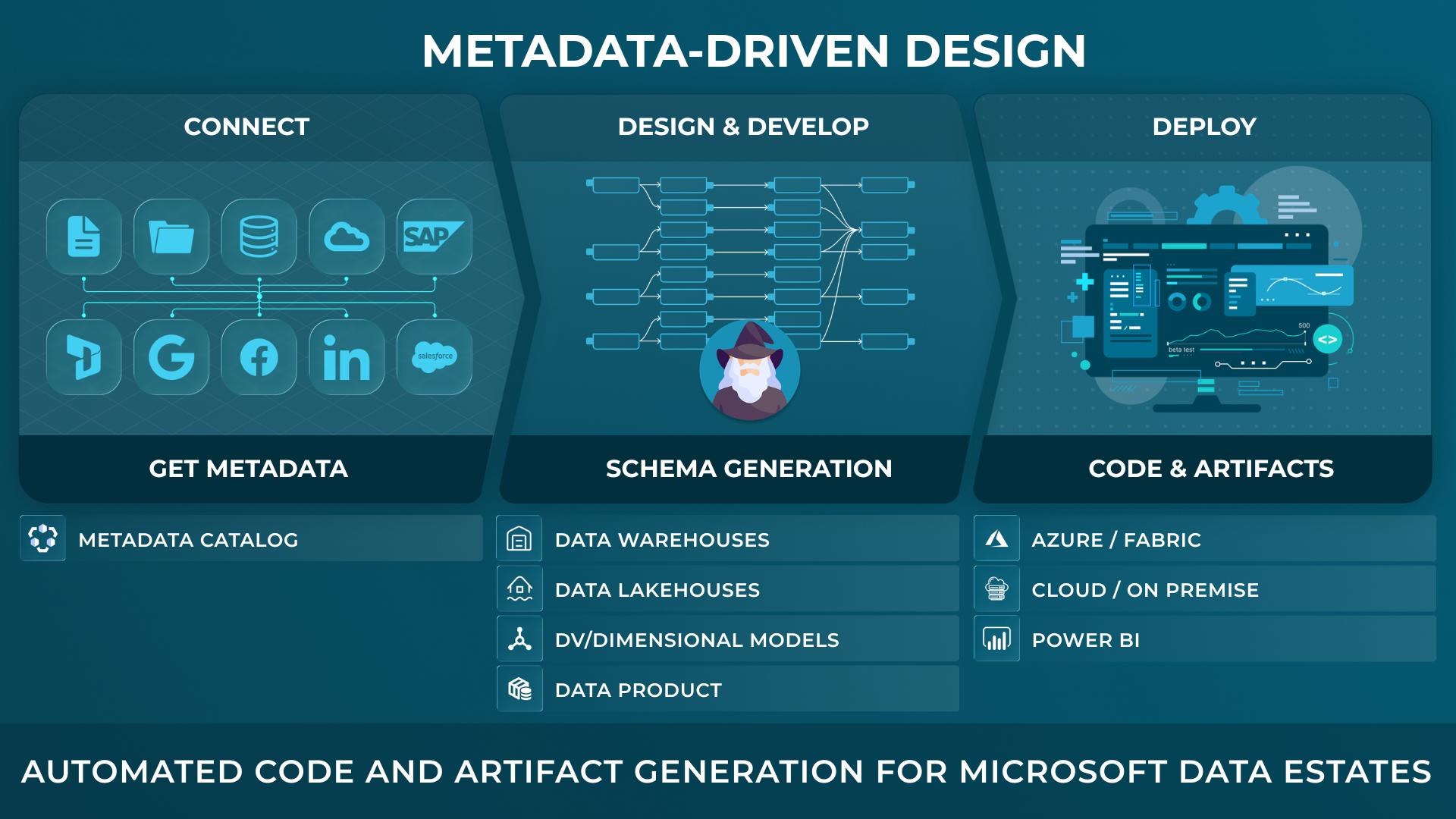
Increase development capacity. Keep control as you scale.
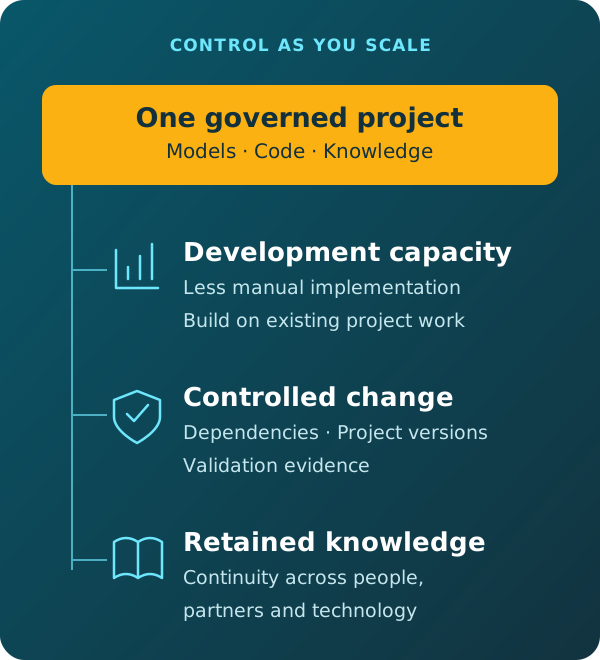
AnalyticsCreator connects design, implementation, validation and change in one governed project. Intelligent wizards reduce manual development effort while models, implementation code and project knowledge remain connected across the data analytics lifecycle.
Reliable implementation. Retained knowledge. Controlled change.
Reduce implementation effort. Make room for business priorities.
Growing demand for analytics does not have to create the same growth in manual development and maintenance work.
AnalyticsCreator's intelligent wizards use source metadata and development choices to create project-specific models and processing logic. The corresponding code evolves with the model and remains visible during development.
Working prototypes provide an early basis for assessing requirements and technical feasibility. The project can then be extended as understanding develops, retaining the initial design and implementation work.
Customer-created templates or selected model elements can also be reused where appropriate. A complete template is not required.

CEO:
“How to create a modern data analytics platform”
Peter Smoly, CEO of Analytics Creator explains how to build a modern data warehouse new and changing requirements from business and IT result in a dificiency of your data architecture.

Keep development and change connected throughout the lifecycle.
The governed project connects business definitions, data and semantic models, transformation logic, implementation code and settings. This context remains available from initial design through release and subsequent changes.
- Project history
- Integrated project versioning preserves defined states of the connected models, code and settings, providing a reference for continued development and review.
- Visible dependencies
- Lineage connects source structures, transformations and analytical models. After source metadata is refreshed, affected places are automatically shown for new or changed source fields.
- Validation evidence
- Integrated testing executes validations, compares results with expected outcomes and records differences. Regression testing helps identify unintended effects after changes.
- Controlled releases
- Native asset generation, packaging and deployment support the organisation's release process. Git and external CI/CD tools are optional and can be integrated where required.
AnalyticsCreator provides connected project information and validation evidence. Approval, access and release responsibilities remain with the organisation's agreed controls.
Retain the business knowledge. Adapt the implementation.
Established definitions, relationships and transformation logic remain part of the AnalyticsCreator project as supported target technologies change.
Target-specific structures and settings can be adapted for environments including on-premises SQL Server, Azure and Microsoft Fabric, with supported Power BI semantic outputs. Technology changes can require design adjustments and validation, while building on retained project knowledge.
Native assets run without an AnalyticsCreator production runtime. Operation can be managed by the customer, a service partner or a shared team according to the agreed responsibilities.
Preserve project knowledge as a business asset.
Business definitions, models, processing logic, code and documentation remain connected in the AnalyticsCreator project. This accumulated knowledge provides a foundation for continued development across changes in people, partners and technology.
Retaining that context reduces the effort required to rediscover existing logic, supports continuity and makes future changes less dependent on individual memory.
Analytics lifecycle control: common questions
How does AnalyticsCreator increase development capacity?
Intelligent wizards reduce manual work when developing project-specific models and processing logic. Models and implementation code develop together, and native assets are prepared from the connected project. Working prototypes and retained project knowledge also reduce the need to recreate earlier work.
Does AnalyticsCreator require standard templates?
No. Its wizards work from source metadata and development choices. Organisations can create and reuse templates or selected model elements where they fit the requirements, but a complete template is not required.
Are Git and external CI/CD tools required?
No. AnalyticsCreator includes project versioning, testing, native asset generation, packaging and deployment capabilities. Project files and generated artefacts can also be incorporated into existing Git and CI/CD processes.
Who can operate the generated solution?
The customer, a service partner or a shared team can operate the solution according to the agreed responsibilities. Generated native assets run in their target environment without an AnalyticsCreator production runtime.
What can be retained when technology changes?
The project retains business definitions, model relationships, transformation logic and implementation knowledge. Supported target technologies can require adjustments to structures, settings and implementation, followed by validation. The existing project provides a foundation for that work.
Explore the next step
Free Trial
REGISTER NOW AND ACTIVATE YOUR FREE TRIAL
