Back to all Blogs
Metadata-Driven Automation in Microsoft Data Warehousing: From Manual Builds to CI/CD



Metadata-driven automation replaces manual SQL and ETL coding in Microsoft SQL Server, Synapse, and Fabric by generating all data warehouse artifacts directly from structured metadata. This enables standardized, version-controlled, and audit-ready delivery through CI/CD pipelines—reducing risk, improving quality, and accelerating deployment at enterprise scale.
Replacing Manual Work with Metadata-Driven Automation
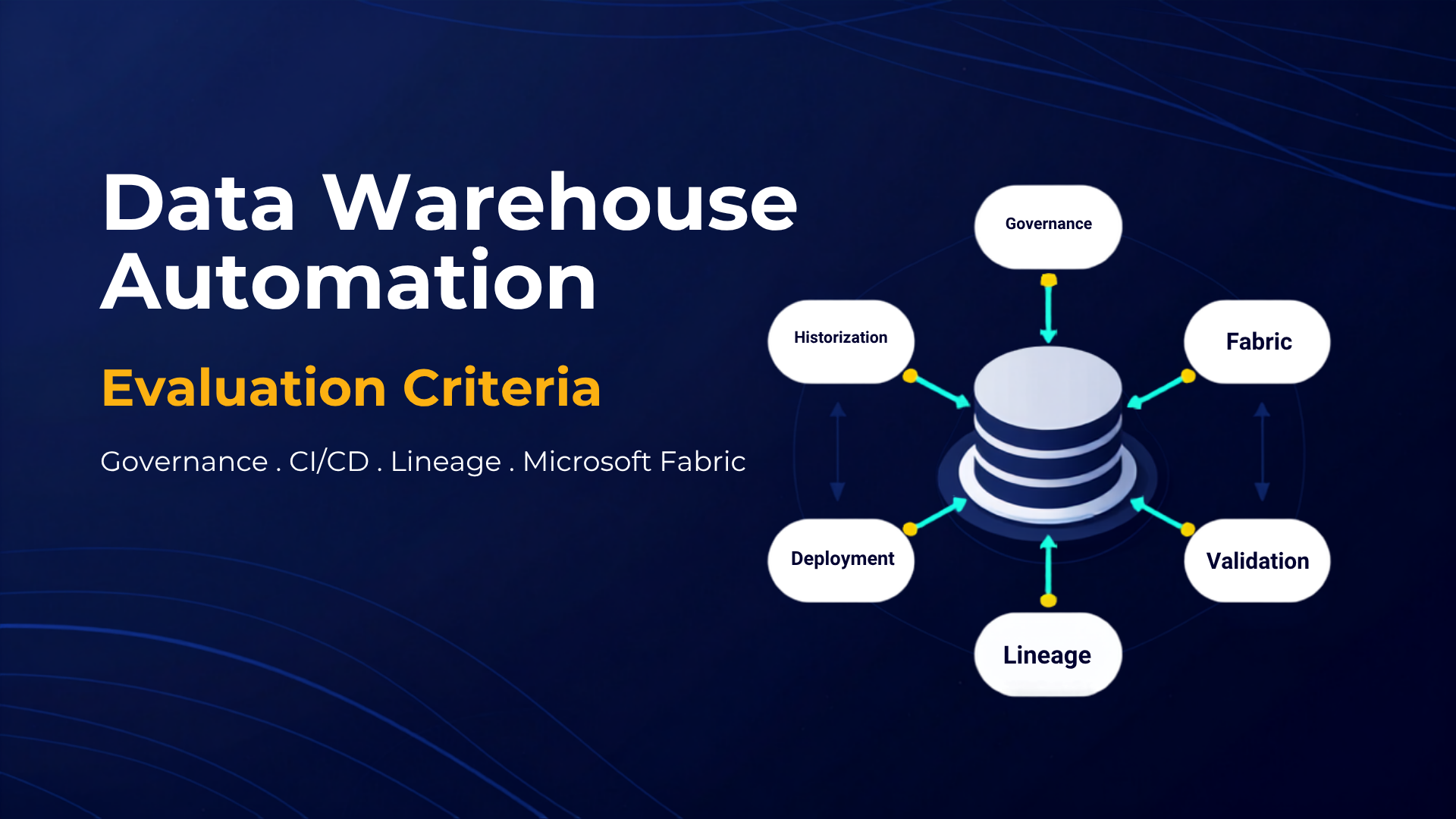
Manual DWH builds are no longer sustainable at enterprise scale. Metadata-driven platforms like AnalyticsCreator eliminate the need for hand-coded SQL, enabling engineers to define all logic—tables, pipelines, historization—in a central model. From this model, the system generates SQL scripts, ETL logic, and documentation, all standardized and ready for deployment via DevOps pipelines. Changes in metadata trigger regeneration, keeping every environment aligned with zero manual effort.
CI/CD Patterns for Microsoft Data Automation
AnalyticsCreator supports CI/CD by storing metadata in version-controlled repositories and generating code for every layer of the stack. Pipelines can automatically validate, deploy, and roll back changes in SQL Server, Synapse, and Fabric environments. Test cases, naming standards, and lineage documentation are enforced through automation, making every release predictable and compliant. Microsoft Learn’s Fabric Data Warehouse and Modern Data Warehouse guides reinforce these best practices.
Best Practices for Enterprise-Scale Automation
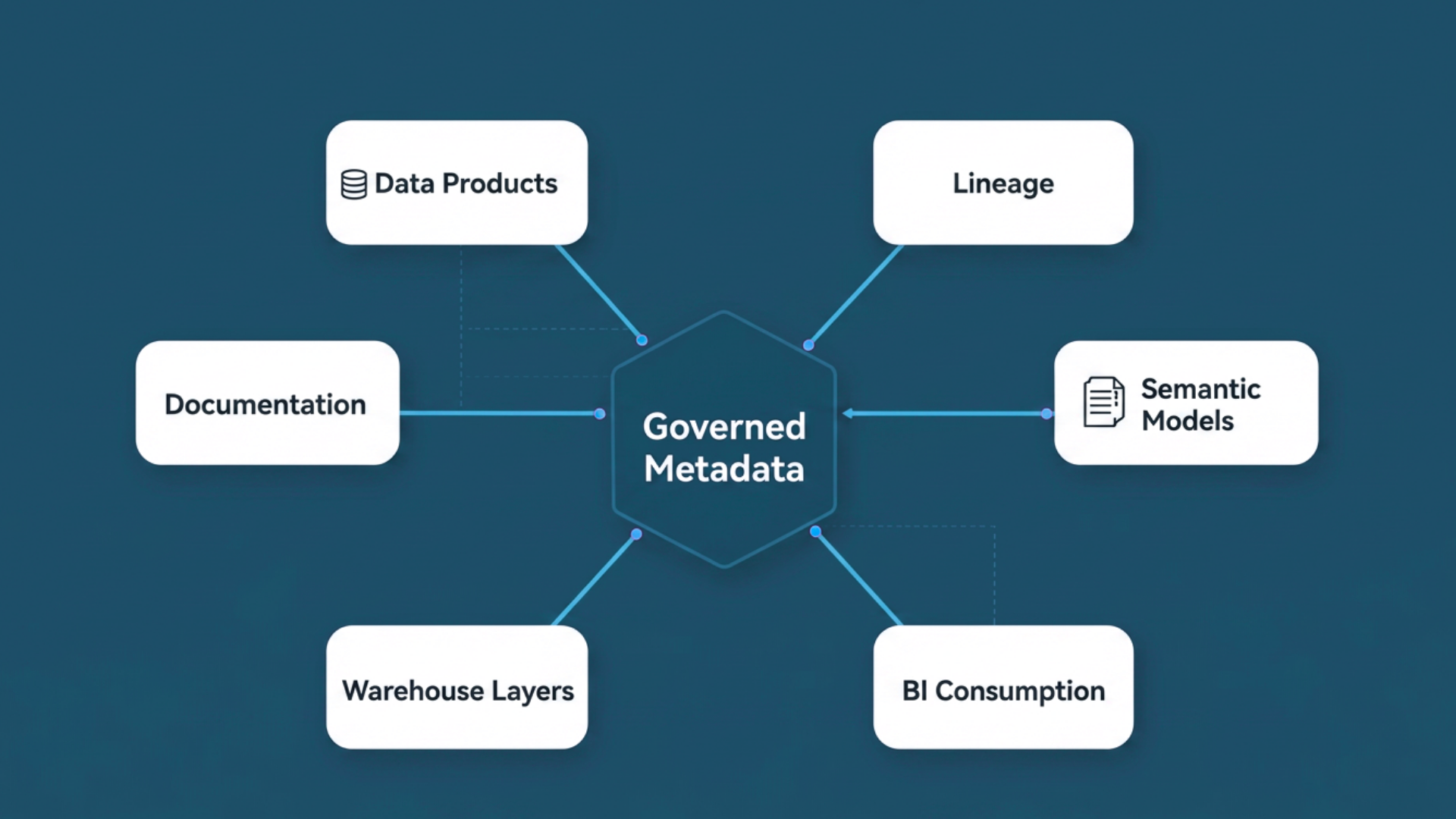
Automation at scale demands more than speed—it requires governance. AnalyticsCreator integrates with Microsoft Purview for policy enforcement, supports role-based access, and logs every metadata change. With built-in audit trails, approval flows, and CI/CD readiness, organizations can trust that every deployment is secure and repeatable. Governance is not bolted on—it's baked into the automation logic from day one.
Conclusion
By centralizing design logic in metadata and connecting it directly to CI/CD pipelines, Microsoft data teams can finally eliminate drift, reduce rework, and accelerate delivery. Metadata-driven automation with AnalyticsCreator isn’t a shortcut—it’s the core of sustainable, governed DataOps for modern SQL and Fabric environments.
Frequently Asked Questions
What is metadata-driven automation in data warehousing?
It’s the practice of generating all DWH artifacts—SQL, pipelines, documentation—from a central metadata model instead of writing manual code.
Which Microsoft platforms support this approach?
AnalyticsCreator supports SQL Server, Azure Synapse, and Microsoft Fabric.
How does this improve CI/CD for data teams?
Metadata changes trigger automated regeneration and deployment via Git or Azure DevOps, ensuring version control and faster delivery.
What’s the benefit compared to manual builds?
Manual builds are time-consuming and error-prone. Automation delivers faster, repeatable, and governed results.
Can this approach help with compliance?
Yes. Metadata-driven pipelines capture lineage, audit trails, and policy enforcement automatically, aligning with tools like Microsoft Purview.
What happens when business rules change?
You update the metadata once, and all environments regenerate automatically with the new logic—no manual script rewrites.
Does this replace data engineers?
No. It empowers them to focus on modeling and governance, not low-level coding or deployment tasks.
How do we get started with AnalyticsCreator?
Visit www.analyticscreator.com
to book a demo or explore the product features.