English
Extend self-service analytics. Build on governed models.
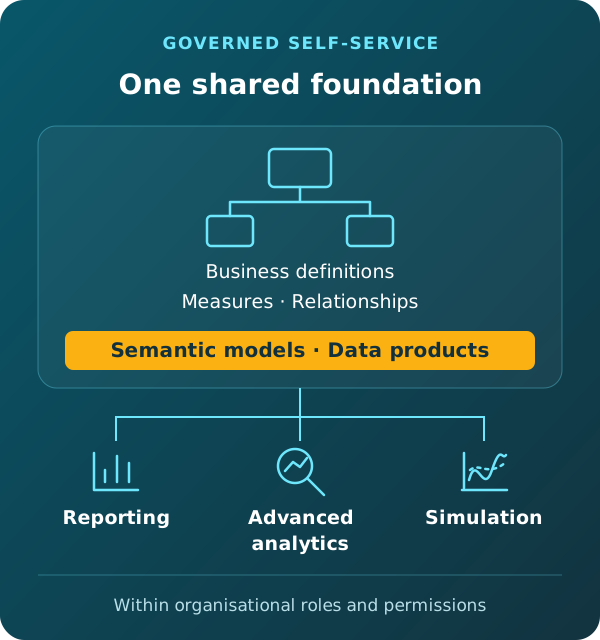
AnalyticsCreator extends self-service beyond reporting into the models that support analysis. Business definitions, measures, relationships and semantic models form a connected foundation that analysts can contribute to within their organisation's roles and permissions.
Design with intent. Generate owned artefacts. Deploy with control.
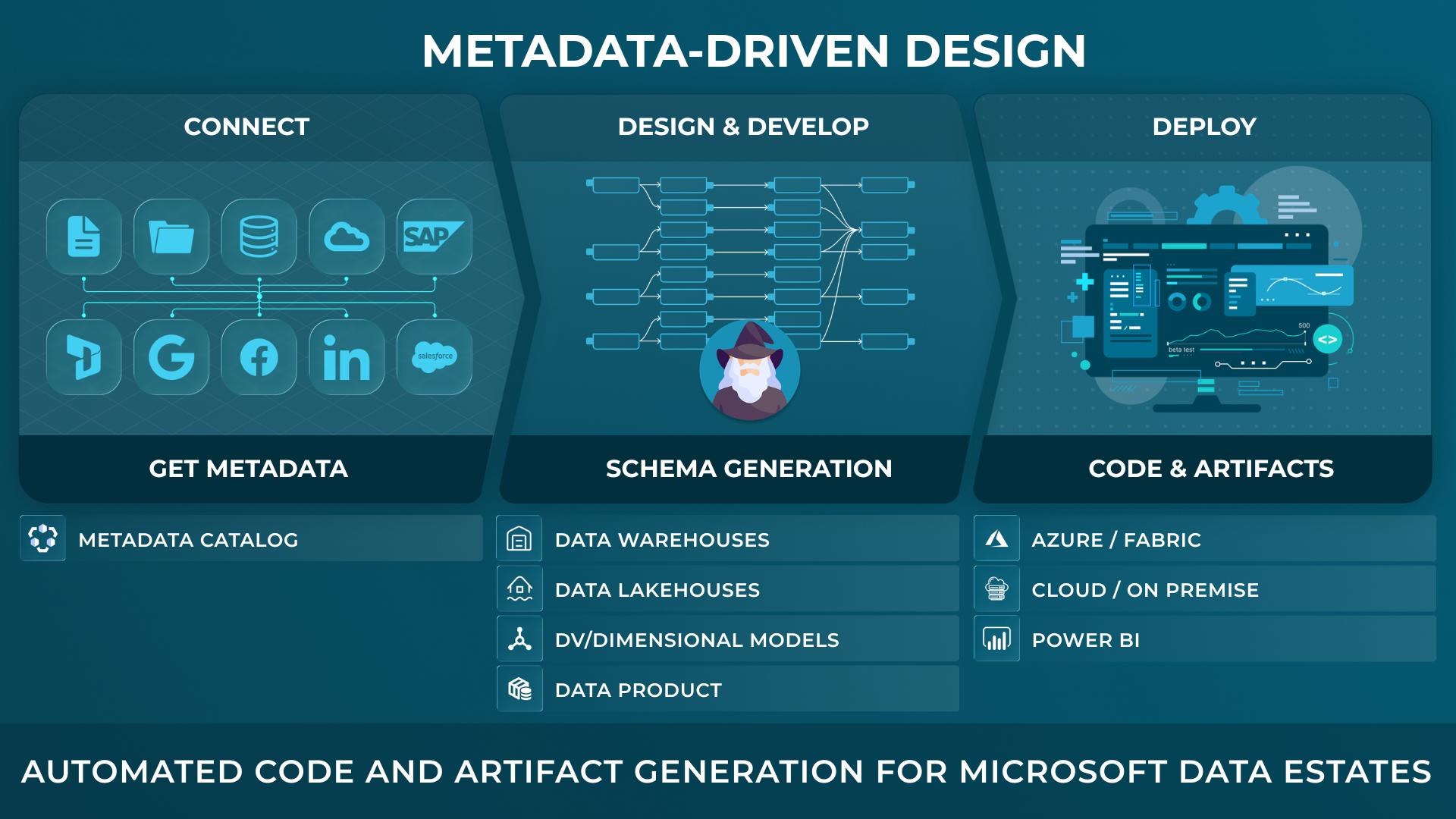
AnalyticsCreator gives data teams a metadata-driven design application to define and import metadata, model target structures, generate implementation artifacts, and see lineage and change impact before deployment across SQL Server, Azure, Microsoft Fabric and Power BI.
Built for technical buyers who need faster delivery, visible lineage, and controlled change across the Microsoft data estate.
Make business intent clear before implementation.
Analytical requirements need a shared understanding of the business question, its intended meaning and the expected outcome before they become technical structures.
AnalyticsCreator connects this business context with the data models, semantic models and implementation logic developed in the project. Business intent remains available as a reference throughout development and subsequent changes.
Extend semantic models for more advanced analytics.
Contribute within agreed permissions.
Analysts can contribute to business definitions, measures, relationships and semantic models within the data estate, subject to their organisation's roles and permissions.
Extend a shared semantic foundation.
Different analytical domains can build on a shared foundation as requirements evolve, reducing the need to recreate definitions and semantic models separately for each analyst or frontend tool.
Measures, relationships and hierarchies remain connected to the underlying data structures and transformations. Supported Power BI semantic models and Tabular models carry that design into the analytical environment.
CEO:
“How to create a modern data analytics platform”
Peter Smoly, CEO of Analytics Creator explains how to build a modern data warehouse new and changing requirements from business and IT result in a dificiency of your data architecture.
Apply governed self-service at the data product level.
AnalyticsCreator connects a data product's business context, models and dependencies, providing a defined foundation for reporting, advanced analytics and simulation.
That foundation can support different analytical uses while retaining the definitions and relationships behind the data. AnalyticsCreator maintains the design context; the chosen analytical tools use the resulting data and models.
Make analytical knowledge a lasting business asset.
The AnalyticsCreator project is a knowledge base for the analytics solution, retaining business definitions, connected models, transformation logic, implementation code and documentation. This organisational asset remains available for future development across changes in people, analytical tools and target technologies.
Governed self-service analytics: common questions.
What does governed self-service mean in AnalyticsCreator?
It means extending participation beyond reports into the business definitions and semantic models behind them. Contributions remain connected to the project’s underlying design and are subject to the organisation’s roles and permissions.
Does AnalyticsCreator replace Power BI or other analytical tools?
No. AnalyticsCreator is a design application used to develop connected models and their implementation. It generates supported analytical artefacts, including Power BI semantic models and Tabular models, for use in the selected analytical environment.
Does every analyst need to create a separate semantic model?
No. A shared, governed foundation reduces the need for each analyst to build a separate model. Semantic models can be extended for different analytical requirements within the organisation’s agreed responsibilities and permissions.
Does AnalyticsCreator perform advanced analytics and simulation?
AnalyticsCreator provides the connected design foundation and generates supported implementation artefacts. Advanced analysis and simulation take place in the tools selected for those activities, using the resulting data and models.
Explore the next step
Free Trial
REGISTER NOW AND ACTIVATE YOUR FREE TRIAL