Back to all Blogs


The technical requirements for a Data Warehouse (DWH) are constantly growing, and maintaining these manually is becoming increasingly difficult and complex. Advanced analytics requirements further increase the complexity of the data model—making automation the only sustainable solution.
As the world becomes more data-driven, the technical requirements for a Data Warehouse expand at an unprecedented rate. The sheer volume and complexity of data that organizations need to process make manual maintenance increasingly time-consuming and impractical. With the continuous influx of new data sources and the rising demand for real-time analytics, data models have become more intricate than ever. Microsoft estimates that 2.5 trillion bytes of information are processed by organizations every day.

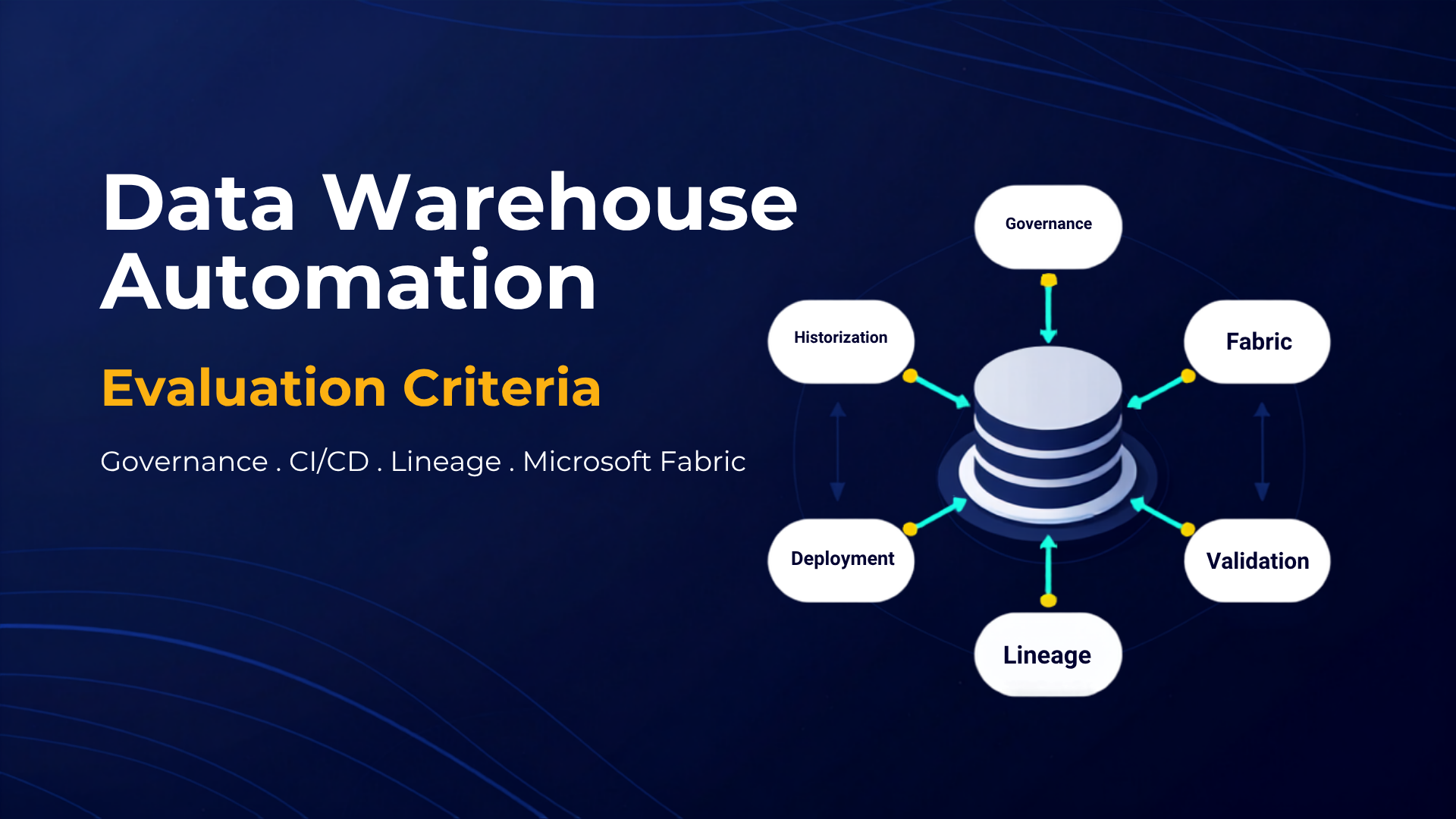
Automation has become a game-changer for maintaining and managing a Data Warehouse. With ever-increasing technical requirements, manual updates are no longer feasible. Automation removes these burdens by leveraging advanced technologies and intelligent algorithms to streamline model generation, maintenance, and scaling. As a result, data professionals can shift their focus from repetitive manual tasks to high-value activities such as modeling, governance, and deriving insights.
With built-in data governance and cataloging features in AnalyticsCreator, automation also strengthens organizational control over the data used for analytics and decision-making. This not only boosts efficiency but also improves compliance, transparency, and overall data integrity. By handling the technical complexities in the background, automation allows businesses to concentrate on interpreting their data and driving strategic, data-driven decisions.
In addition, automation plays a critical role in meeting modern advanced analytics requirements. As organizations increasingly demand predictive and prescriptive insights, data models must support complex algorithms, statistical models, and machine-learning workflows. Automation simplifies the integration of these advanced analytics capabilities, ensuring that companies can unlock the full value of their data.
By embracing automation, businesses can overcome the growing complexity of modern DWH environments. Automation empowers them to stay competitive in a fast-moving data landscape—enabling faster decisions, higher operational efficiency, and improved business outcomes. With AnalyticsCreator as the automation engine, organizations can fully harness the power of their data and thrive in the digital era.

The rapid growth and complexity of today’s data landscape have made manual DWH maintenance nearly impossible. AnalyticsCreator has become a breakthrough solution, helping organizations effortlessly manage their Data Warehouse and meet the advanced analytics needs of modern businesses. By leveraging AnalyticsCreator’s full automation capabilities, data professionals can focus on generating value rather than struggling with manual updates.
Automation strengthens data governance, improves compliance, and enhances data integrity. Ultimately, embracing automation enables organizations to accelerate data-driven decision-making, increase operational efficiency, and deliver better business outcomes. To fully unlock the power of data, organizations must explore and adopt automation solutions for their Data Warehouse.