Back to all Blogs


Discover how AnalyticsCreator can help your organization prepare for and comply with the new EU AI Act by strengthening data governance, transparency, and responsible AI practices.
Understanding the New EU AI Act
The new EU AI Act is the first comprehensive regulatory framework designed to govern the development and use of artificial intelligence in the European Union. Its goal is to ensure that AI systems are:
- Safe and reliable
- Transparent and explainable
- Respectful of fundamental rights
- Subject to clear accountability and governance
The Act applies to organizations that develop, deploy, distribute, or use AI systems within the EU and introduces obligations based on risk categories, from minimal to high risk. It aligns with other major regulations such as GDPR and the Digital Services Act (DSA), forming a unified compliance landscape for digital technologies.
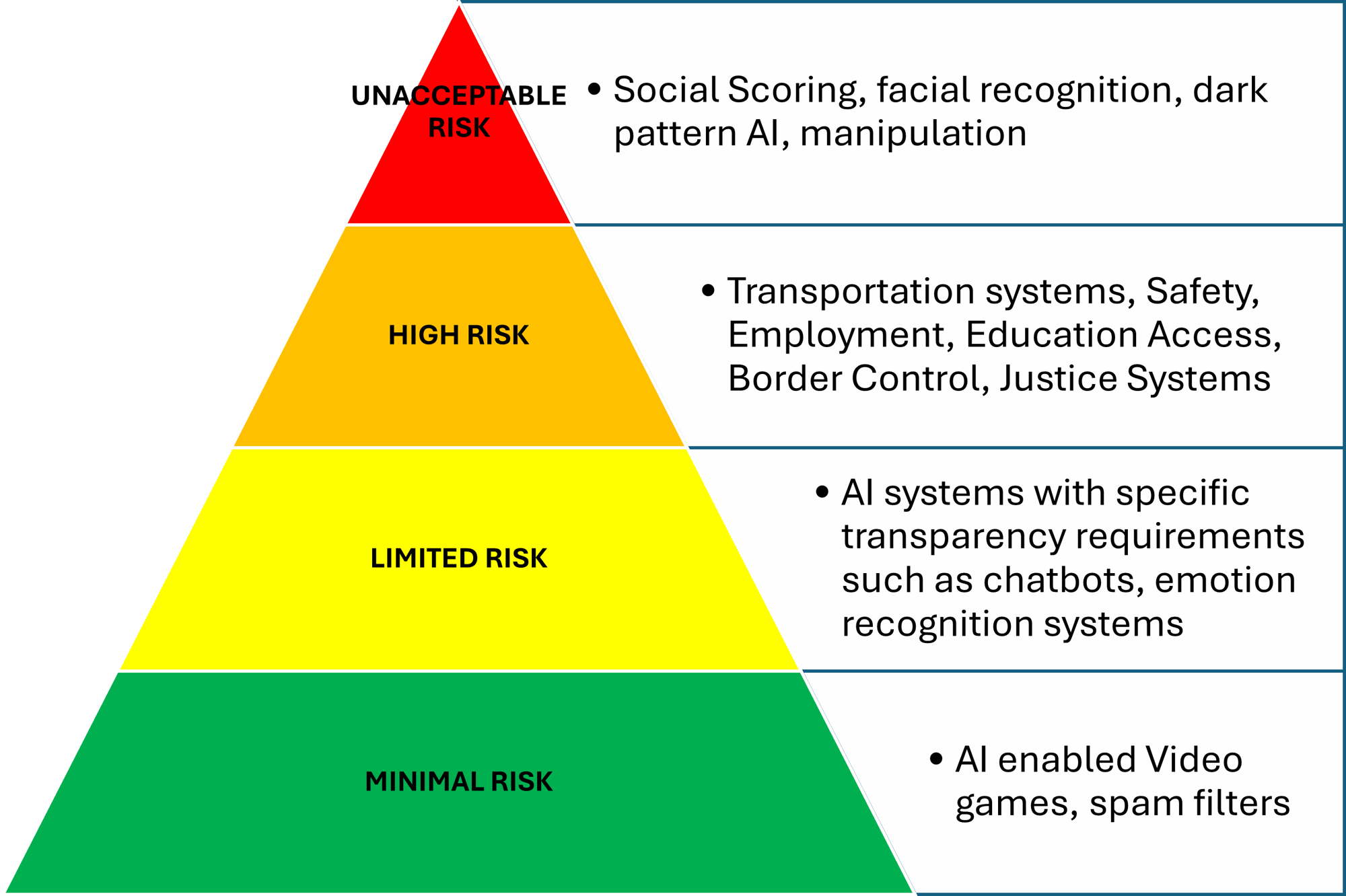
- Risk-based approach: AI systems are classified into four risk categories (unacceptable, high, limited, minimal) with corresponding regulations.
- Strict controls: Unacceptable AI (e.g., social scoring) is banned, high-risk AI requires strong compliance, and minimal-risk AI operates freely under a code of conduct.
- Governance structure: European AI Board and Office enforce the Act and advise on standards. Significant sanctions apply for non-compliance.
- Global implications: Sets a precedent for other countries and addresses rising public concerns about AI.
The Impact of the EU AI Act on Companies
The EU AI Act is not just a legal requirement; it is a strategic signal for how AI should be built and used in Europe. It pushes companies to adopt responsible AI practices that are aligned with European values: safety, fairness, transparency, and human oversight.
For organizations, this means:
- Adapting governance frameworks to include AI risk management
- Documenting how AI models are trained, tested, and used
- Ensuring traceability of data and decisions
- Protecting user rights and avoiding discriminatory outcomes
Companies that respond early gain a competitive advantage: they reduce regulatory risk, build customer trust, and differentiate themselves as responsible AI adopters in the market.
Key Requirements of the EU AI Act
With implementation expected by the end of 2025, the EU AI Act introduces specific obligations for organizations involved in the AI lifecycle. These include:
- Risk-based classification of AI systems (e.g., high-risk systems facing stricter requirements)
- Robust data governance for training, validation, and testing datasets
- Technical documentation and record-keeping to demonstrate compliance
- Transparency and user information about AI system capabilities and limitations
- Human oversight over critical decisions
- Monitoring, incident handling, and post-market surveillance
The Act is designed to work alongside existing EU regulations such as GDPR and the DSA, creating a consistent framework for handling data, AI, and digital services. This integrated approach helps organizations build one coherent governance model instead of isolated compliance silos.
Implications for Data & Analytics
Data and analytics lie at the heart of AI systems, and data warehouses (DWHs) are key sources for training, testing, and monitoring AI models. The EU AI Act therefore has direct impact on how organizations collect, store, transform, and govern their data.
Enhanced Data Governance
- Stronger data quality and security: Transparency and accountability requirements lead to stricter data governance in DWHs — including better data quality checks, improved lineage tracking, and tighter access controls.
- Limited and controlled data sharing: Restrictions on high-risk AI use cases may require secure data-sharing mechanisms such as data enclaves or federated learning to enable collaboration without exposing sensitive data.
- Focus on explainability and fairness: Organizations will increasingly need data models and analytics structures that support explainable AI and enable fairness checks and bias analysis.
Data Privacy Considerations
- Enhanced anonymization and pseudonymization: Protecting individual rights will drive wider use of anonymization and pseudonymization for sensitive datasets, which may influence how models are trained and how granular analytics can be.
- Data minimization and purpose limitation: The Act encourages collecting and storing only the data necessary for a specific use case, including exploring synthetic data for training where appropriate.
Technical Considerations
- Risk assessments and controls: Organizations must systematically assess AI risks and implement technical and organizational measures aligned with the system’s risk category (e.g., monitoring, access controls, human oversight, and documentation).
- Adaptable DWH architecture: To keep pace with evolving rules and audits, data platforms must be flexible, allowing quick adaptation of data models, governance policies, and documentation.
While the EU AI Act increases complexity, it also presents a major opportunity: improving data quality, security, and transparency ultimately leads to better, more trustworthy AI and analytics outcomes.

How AnalyticsCreator Supports EU AI Act Compliance
Legal and ethical expertise are essential for compliance, but technology plays a critical enabling role. AnalyticsCreator provides a powerful Data Warehouse Automation (DWA) engine that helps organizations implement the data and governance capabilities needed under the EU AI Act.
Addressing Key Regulatory Areas
Data Governance
- Holistic Data Model & Lineage: AnalyticsCreator builds and visualizes end-to-end data lineage, making it easier to track data flows, identify high-risk data, and support data minimization principles.
- Predefined Templates & Automation: Standardized patterns for data integration, modeling, and historization support consistent, repeatable processes aligned with responsible AI practices.
- Automatic Documentation: Metadata, transformations, and data flows are automatically documented, simplifying evidence creation for audits and explainability requirements.
- Data Quality & Security: Automated checks and standardized code generation reduce errors, while clear structures simplify implementation of role-based access and segregation of duties.
- Versioning of Data Models: Built-in versioning tracks how data models evolve over time, preserving transparency and integrity across historical configurations.
Transparency & Explainability
- Centralized Transformations: All transformations and calculated fields are defined centrally, enabling clear documentation of how inputs become outputs — essential for AI explainability.
- BI Tool Integration: AnalyticsCreator integrates seamlessly with tools like Power BI or Tableau, enabling transparent reporting layers that help users understand AI-driven insights.
Fairness & Non-discrimination
- Data Lineage & Quality: By knowing where data comes from and how it is transformed, organizations can better detect and mitigate potential biases in source data.
- Flexible Modeling & Testing: Multiple modeling approaches and test automation help teams experiment, validate, and refine data structures that support fairness checks and robust AI monitoring.
Additional Benefits of Using AnalyticsCreator
- Reduced Compliance Effort: Automation of data pipelines, documentation, and governance patterns lowers manual workload and reduces the risk of human error.
- Data Governance Best Practices: Features such as holistic data models, standardized templates, and best-practice code generation go beyond minimum regulatory requirements and promote responsible data use.
Important: AnalyticsCreator is an enabler, not a substitute for legal advice. True compliance with the EU AI Act requires a comprehensive approach that combines technology, governance, legal expertise, and ethical oversight.
Streamlined Compliance and Responsible AI: Why Choose AnalyticsCreator
Complying with the EU AI Act can be complex and resource-intensive. AnalyticsCreator helps reduce this burden by combining automation, governance, and documentation in a single platform, supporting both compliance and innovation.
AnalyticsCreator: A Comprehensive DWA Engine
AnalyticsCreator is a Data Warehouse Automation engine that supports the entire data lifecycle behind AI initiatives, including:
- Data Ingestion & Transformation: Connect to diverse sources, cleanse data, and prepare it for analytics and AI.
- Data Modeling & Warehousing: Design and generate robust data models for warehouses and lakehouses that underpin AI systems.
- ETL & Automation: Automate data pipelines and ETL/ELT processes for consistency and repeatability.
- Machine Learning & AI Integration: Provide clean, structured, and well-governed data layers for integration with AI and ML frameworks.
- Visualization & Reporting: Feed high-quality, trusted data into BI tools to present AI results clearly and transparently.

Benefits of Using AnalyticsCreator for EU AI Act Compliance
- Reduced Compliance Costs: Automated governance tasks, documentation, and risk-related structures minimize manual work and speed up implementation.
- Enhanced Data Governance: Lineage, historization, and data quality functions support strong, audit-ready governance foundations.
- Improved Transparency & Explainability: Centralized transformations and metadata make it easier to understand and explain how AI models are fed and how outputs are derived.
- Lower Bias Risk: Data quality checks and flexible modeling help reduce bias at the data and model input level.
- Compliance Confidence: Organizations benefit from a platform designed with regulatory and governance use cases in mind, making it easier to align with EU AI Act expectations.
- Tracking Data Model Lifecycle: Lifecycle and version control of data models ensure full transparency around changes and their impact over time.
Investing in Responsible AI
AnalyticsCreator supports not only regulatory alignment but also a broader culture of responsible AI. By promoting transparency, accountability, and fairness in data and analytics, it helps organizations build AI solutions that are both compliant and trustworthy — creating long-term value for businesses, customers, and society.