
AnalyticsCreator evaluation · Step 1 of 5
Get the big picture
Understand how AnalyticsCreator turns business and data models into deployable Microsoft data solutions, and how service providers, ISVs and technology partners can use it in their own delivery models.
The product in one minute
Design the business and data model first. Then generate the implementation.
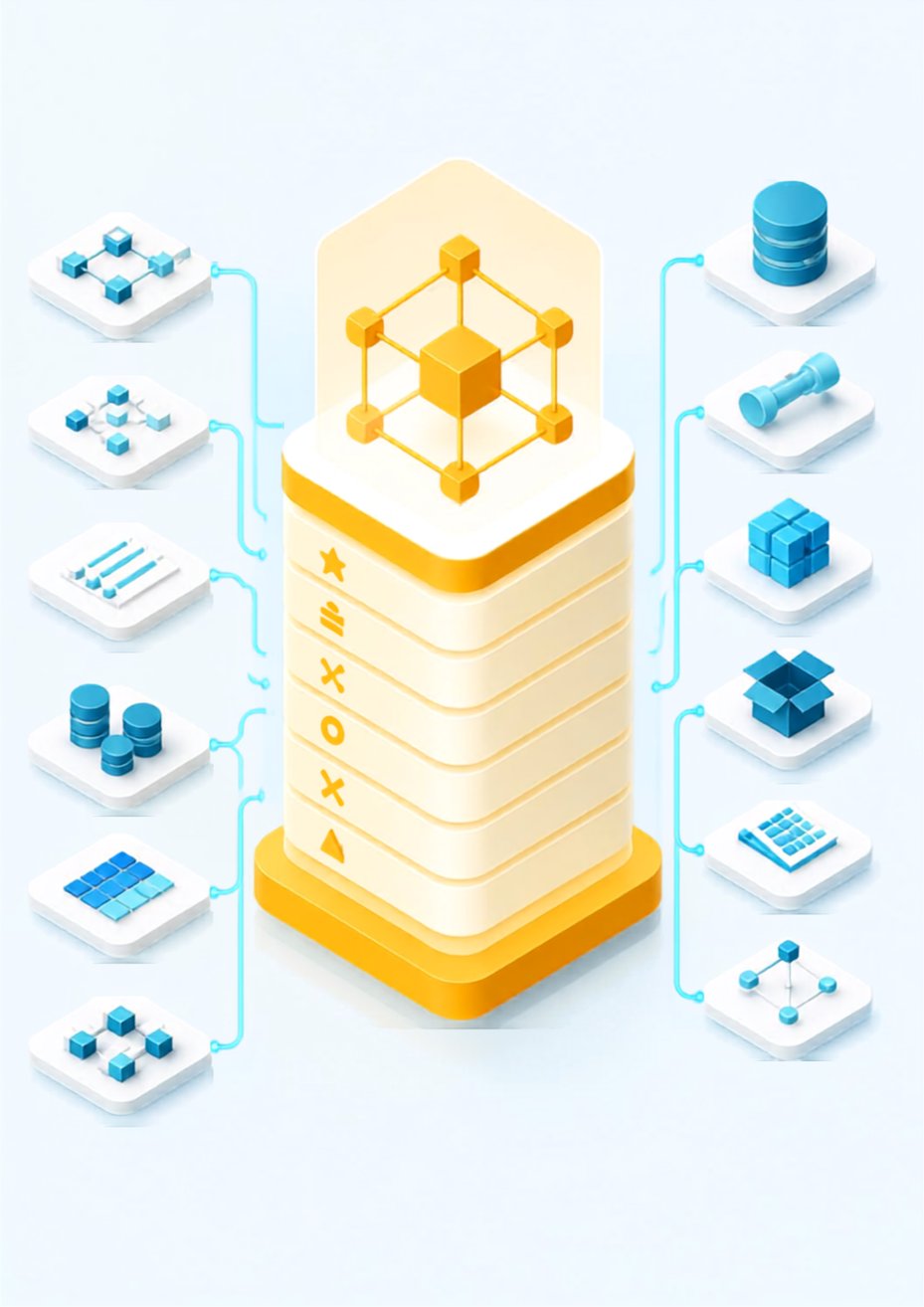
AnalyticsCreator is a metadata-driven data product engineering tool for the Microsoft data stack. It separates the approved design from the generated technical implementation.
Define the business and data model
Capture concepts, relationships, mappings, business rules and the target analytical structure.
Apply guided engineering
Use wizards, assistants, templates and proven patterns for modelling, loading, transformation and historisation.
Generate native assets
Produce connected database, integration, semantic, deployment, documentation and testing-related assets.
Business rules, relationships, transformations and architectural decisions remain in the metadata model rather than existing only inside individual SQL scripts, pipelines or semantic models.
Metadata-driven development
One governed workflow across the delivery chain
AnalyticsCreator maintains the design and its dependencies in a shared metadata repository. The selected generators then turn that model into the assets required for the chosen Microsoft environment.
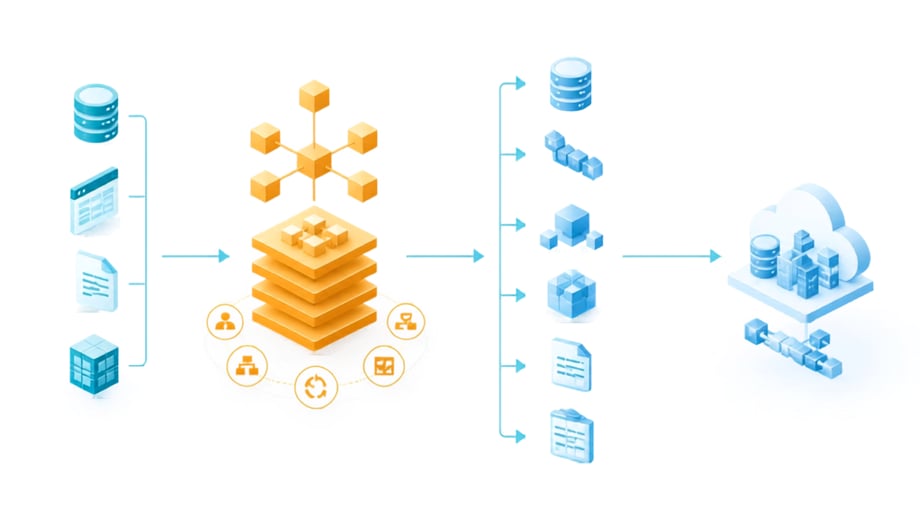
Import source metadata
Bring in structures from databases, files, SAP sources and other systems without moving operational data into AnalyticsCreator.
Design and govern
Define business concepts, architecture, relationships, transformations, historisation and generation rules in the metadata model.
Generate connected assets
Generate database, ETL, semantic, deployment, documentation, lineage and testing-related outputs from the approved design.
Deploy and operate
Deploy the native assets into SQL Server, Azure, Microsoft Fabric, Power BI and the existing DevOps process.
AnalyticsCreator is a design-time engineering application. Generated workloads run independently and do not require an AnalyticsCreator production runtime.
Modelling and engineering
Use proven approaches or apply your own standards
AnalyticsCreator does not force every organisation into one modelling methodology. Use embedded approaches, combine them or apply your own delivery standards.
Kimball modelling
Design facts, dimensions, stars and analytical structures with the required relationships and historisation.
Data Vault 2.0
Model hubs, links, satellites and related loading and historisation structures.
3NF and Inmon-style models
Build integrated normalised structures for enterprise data warehouse architectures.
Hybrid architectures
Combine modelling methods and layers instead of forcing the complete solution into one fixed pattern.
Wizards and templates
Apply guided patterns for modelling, ingestion, transformation, persistence, calendars and historisation.
Your standards and logic
Add organisation-specific architecture, naming, transformation and deployment conventions.
Generated capabilities
More than database objects
The exact outputs depend on the selected architecture and target environment. The same model supports the connected engineering chain.
Models and database objects
Tables, views, relationships, transformations, staging structures and data marts.
Historisation and change
Slowly changing dimensions, snapshots, delta patterns and audit information.
ETL and orchestration
Loading, transformation, scheduling and orchestration assets for supported Microsoft environments.
Semantic models
Semantic structures that remain connected to the warehouse design and approved definitions.
Deployment and DevOps
Deployment assets that enter existing source-control, release and operational processes.
Documentation, lineage and tests
Documentation, lineage, impact information and validation support derived from the implementation metadata.
Different business models
How different organisations use AnalyticsCreator
The same metadata-driven foundation can support professional services, recurring offerings, software products, joint solutions and partner-owned extensions.
Consulting
Deliver prototypes, warehouses, migrations and analytics solutions through a model-first process.
Explore consultingManaged Services
Build repeatable data warehouse and analytics services with governed customer-specific designs.
Explore managed servicesSaaS and Platform Providers
Deliver scalable analytical services while retaining customer-specific technical implementations.
Explore platform modelsISVs
Add generated warehouse, data mart and semantic foundations to an existing product.
Explore the ISV modelValue-Added Partners
Create templates, connectors, generators, MCP services, accelerators and specialist add-ins.
Explore value-added modelsSolution Partnerships
Combine complementary services or technology in a defined customer solution.
Explore solution partnershipsFreelancers and MVPs
Extend individual capacity and deliver advanced modelling without building a large engineering team.
Explore the freelancer modelReferral Partners
Introduce suitable organisations without taking responsibility for technical delivery.
Explore referralsTechnology Partners
Connect APIs, sources, testing tools, governance solutions, AI services and front ends.
Explore technology partnershipsThe AI connection
AI makes the approved design more important, not less
AI agents can generate SQL, pipelines, models and documentation. They still require approved definitions, architectural rules and complete dependency context.
AnalyticsCreator provides the governed workflow through which deterministic generators and specialised AI capabilities can operate from the same maintained model.
Step 3 explains how governed metadata controls automated BI development throughout the complete solution lifecycle.
Recommended resources
Review the supporting material
AnalyticsCreator at a glance
Review the core modelling, generation, deployment and governance capabilities.
Open product overviewSee AnalyticsCreator in action
Watch how a model becomes generated, deployable technical assets.
Watch demonstrationExplore the documentation
Review detailed concepts, workflows, modelling features and technical reference material.
Open documentation